China's white paper calls for joint efforts to build just, equitable global governance system

China's State Council Information Office on Wednesday released a white paper to introduce China's principles, proposals and actions on global governance, foster broader consensus within the international community, ensure more effective responses to global challenges, and build a more just and equitable global governance system.

Titled "More Just and Equitable Global Governance: China's Principles, Proposals and Actions," the paper extends to 36 pages in its English edition with more than 13,600 words. The full Chinese text totals around 20,000 Chinese characters.

Apart from the preface and conclusion, the white paper has five parts. At the beginning, it points out that global governance is a common endeavor that bears on the well-being of all humanity, and building a just and equitable global governance system is a shared vision long pursued by people from across the world.

It adds that China has always been an active participant in, contributor to, and a builder of global governance.

Respond to challenges of times

In 2025, President Xi Jinping proposed the Global Governance Initiative (GGI), which is built on five core concepts: sovereign equality, the international rule of law, multilateralism, a people-centered approach and real actions. According to the latest white paper, China's GGI was proposed to respond to the "severe and complex" challenges of the time.

These challenges, according to the white paper, include intensifying geopolitical tensions and armed conflicts, resurgence of militarism and nuclear proliferation, as well as global economic fragmentation, food and energy insecurity and the widening wealth gap.

The document also mentions the harms to the UN's authority and international laws and basic norms caused by unilateralism and hegemonism. It warned that de-globalization and protectionism are on the rise, while economic and trade issues are being politicized, instrumentalized, and weaponized.

To stabilize and improve the world, the international community needs to be more responsive to the concerns of the Global South in international affairs and fully leverage its role, said the white paper, citing examples of the historic expansion of the BRICS group, the enlarging Shanghai Cooperation Organization (SCO), and the G20's role in development and reform of the global governance system.

Facing these challenges, the white paper said the China-proposed GGI aligns with the growing trend toward greater democracy in international relations and bolsters international confidence in practicing multilateralism. It offers a clear and feasible roadmap for improving global governance, bringing valuable stability and positive energy to a turbulent world.

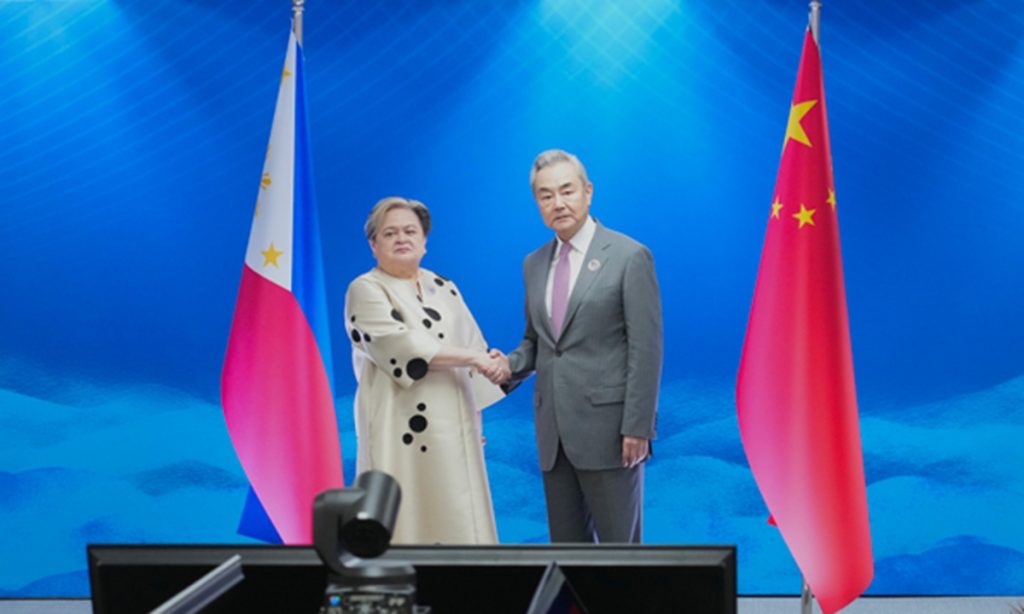
At a press conference to present the white paper on Wednesday, Chinese Foreign Minister Wang Yi said that the GGI has been translated from a Chinese proposal into international practice and is increasingly demonstrating strong vitality. The GGI has been endorsed by nearly 160 countries and international organizations and has received extensive and positive responses from the international community.

Some international media outlets including Reuters have noticed China's support for a greater voice for the Global South on the international stage, noting that the white paper lays out pathways to build a fairer and more equitable global governance system.

Turkey's Anadolu Agency noted that as the US and Iran are poised to sign a peace deal, China's Foreign Minister Wang Yi voiced support for a ceasefire in the Middle East and calling for coordinated efforts to lay the groundwork for a lasting regional security framework.

Wang Yiwei, professor at the School of International Studies at the Renmin University of China, told the Global Times that the GGI embodies the characteristics of Beijing's major-country diplomacy and sense of responsibility of China, which stands as the world's second-largest economy, a permanent member of the UN Security Council, the largest country of the Global South, and an ancient civilization with a time-honored history.

Taking the ongoing G7 summit in Evian, France, as an example, the expert said that a major component of the prevailing global governance deficits lies in the deficit of representation. "The bulk of existing international rules were formulated by Western countries. Yet global governance is a shared undertaking for all humanity, which cannot be addressed through blocs and alliances set up by a handful of developed nations alone," Wang Yiwei said.

According to the expert, the Western narrative of global governance mostly centers on the question of "who governs" while overlooking the fundamental issue of "governance for whom." By contrast, China's GGI highlights inclusiveness for all and the principles of extensive consultation, win-win outcomes and shared benefits. While acknowledging that countries of the Global South suffer inadequate representation and voices within global governance bodies and international organizations, the GGI does not exclude Western nations.

From roadmap to action

Beyond the clear roadmap laid out by the GGI, China has set a leading example in advancing global governance, translating its governance vision into a wide range of tangible practical measures, analysts said.

According to the press conference held by China's State Council Information Office on Wednesday, China is accelerating the establishment of the World Artificial Intelligence (AI) Cooperation Organization, Xinhua reported.

Earlier, October 2025 saw the inauguration of the International Organization for Mediation (IOMed) in China's Hong Kong Special Administrative Region, the world's first intergovernmental international legal organization dedicated to resolving international disputes through mediation.

Several months later, the World Data Organization (WDO) was established in Beijing in March, aimed at bridging the data divide, advancing global data cooperation and the digital economy. In addition, China will also host a forum on global governance in Xiong'an New Area in North China's Hebei Province this autumn, Foreign Minister Wang Yi announced in May.

Despite this progress, analysts argue that enhanced global solidarity and joint efforts are essential to improve global governance, a view echoed in a key section of the white paper.

"No country can achieve development outside the global governance system, nor can it secure a future without participating in international cooperation. It is not a matter of whether we choose it or not, multilateralism is the only viable path forward," the white paper said.

It noted that China advocates for countries to unite and cooperate, take concrete action and transform the vision and blueprint of the GGI into a roadmap and timeline for joint action.

All countries should firmly uphold the international system with the UN at its core, safeguard the international order based on international law, and uphold the basic norms governing international relations underpinned by the purposes and principles of the UN Charter, instead of reinventing the wheel, according to the white paper.

Zhu Feng, Dean of the School of International Studies at Nanjing University, told the Global Times that against the backdrop of sustained shocks to the international order and global governance, China's people-centered philosophy and commitment to multilateralism echo the shared aspirations of the international community and have garnered extensive positive responses worldwide.

"The world now stands at a historic crossroads. The Middle East situation and the Ukraine crisis keep dragging on with spillover effects, while economic globalization faces severe headwinds," Zhu said, "No nation wishes to see the world grow more divided and exclusive. To tackle all kinds of global challenges, countries must move toward each other and take coordinated joint actions."

Therefore, the most central and urgent task at present is to translate the consensus among countries on advancing global governance into tangible practical steps. In this process, China is not merely the initiator of the GGI, but also a frontrunner delivering concrete multilateral governance measures, Zhu said.

"Global governance finds its source of vitality in practice, hinges on action, and is verified by its effectiveness. A vision is realized only through concrete action. It falls on the international community to turn this vision into reality - setting common goals, embracing a problem-oriented approach and acting in concert," the white paper said.

"China stands ready to work with all parties to deliver on the GGI, uphold the central role of the UN, enable the Global South to play its pivotal role, address gaps and deficits in global governance, and strive to foster a more just and equitable global governance system," Chinese Foreign Ministry spokesperson Lin Jian said on Wednesday.

Chinese envoy calls for political solutions, holistic approach to advance peace in Middle East

China's Permanent Representative to the United Nations Fu Cong on Wednesday local time put forward proposals to advance peace in the Middle East, calling for political solutions, fairness and justice, independence and self-reliance, and addressing both symptoms and root causes, during a Security Council open debate, according to the Xinhua News Agency.

Fu said that the situation in the Middle East remains tense, undermining regional peace and stability while also affecting the global economy and energy security and harming the common interests of all countries. He urged the international community to uphold an impartial position, pool efforts to promote peace, and work toward restoring stability to the Middle East, peace to its people, and peace to the world.

He then outlined four proposals on advancing peace in the Middle East. He called for resolving disputes through political means and peaceful approaches. Fu urged all parties to abide by the purposes and principles of the UN Charter, bridge differences through dialogue and consultation, and refrain from the use or threat of force.

 He said the Security Council should fulfill its primary responsibility for maintaining international peace and security and take active and responsible actions to advance political solutions to hotspot issues. Fu called on relevant parties to the Iran-related situation to exercise calm and restraint, halt actions that could escalate tensions, and resolve differences through political and diplomatic channels. He also urged all parties involved in the Lebanon-Israel situation to immediately cease hostilities and achieve a genuine ceasefire.

Second, he called for upholding fairness and justice and safeguarding regional stability under international law. Fu said the prolonged hotspot issues  in the Middle East stem in part from a lack of justice, non-implementation of relevant Security Council resolutions, and disregard for international law. 

He stressed the need to uphold the authority of the Security Council and international law, warning against selective application and a return to the law of the jungle. He urged the international community to intensify efforts to implement the two-state solution, reject any attempt to annex Palestinian territory, and support the early establishment of an independent Palestinian state and its full UN membership.

He also stressed independence and self-reliance, and called for the building of common security through solidarity and cooperation as the third point. Fu said the path from turmoil to stability in the Middle East lies in overcoming major-power geopolitical rivalry and adopting a common, comprehensive, cooperative and sustainable security approach to build a regional framework that accommodates the legitimate concerns of all parties. 

He said Syria should adhere to the principle of “Syrian-led and Syrian-owned” governance, advance an inclusive political transition, and firmly combat terrorism. He noted that the Golan Heights are internationally recognized as Syrian territory under occupation  and called for Israel’s full withdrawal as soon as possible. He also urged all parties in Yemen to demonstrate political will, restart the peace process, and work toward reconciliation.

Fourth, he called for addressing both symptoms and root causes and promoting long-term stability through development and revitalization. Fu said the international community should deepen cooperation with Middle Eastern countries, support sustainable development and post-conflict reconstruction, and help improve livelihoods to create conditions for peace. 

He called for opposition to protectionism and unilateral actions and rejected illegal unilateral sanctions beyond the scope of Security Council resolutions. He also warned that disruptions in the Strait of Hormuz would undermine global supply chains, trade, and energy security, and called for the restoration of normal navigation.

Myanmar’s President Min Aung Hlaing to Pay a State Visit to China

At the invitation of Chinese President Xi Jinping, President of Myanmar Min Aung Hlaing will pay a state visit to China from June 15 to 19, a Chinese foreign ministry spokesperson announced on Friday.

During the visit, President Xi will hold talks with President Min Aung Hlaing. Premier Li Qiang and Zhao Leji, chairman of the Standing Committee of the National People's Congress, will meet with him respectively, Chinese foreign ministry spokesperson Lin Jian told a daily press briefing.

Noting that China and Myanmar are traditional friendly neighbors and a community with a shared future, Lin said over the 76 years since the establishment of diplomatic ties, guided by the spirit of the Five Principles of Peaceful Coexistence jointly advocated by the two sides, China and Myanmar have stood together through thick and thin, looked out for each other and forged solidarity and cooperation, promoting China-Myanmar relations to achieve considerable progress.

Lin said through President Min Aung Hlaing's visit, China looks forward to working with Myanmar to carry forward the "pauk-phaw" (fraternal) friendship, deepen the comprehensive strategic cooperative partnership, secure more tangible results in building the China-Myanmar community with a shared future, and deliver further benefits to the two peoples.

China ready to enhance cooperation with Myanmar's new government: top diplomat

Wang Yi, Chinese foreign minister and member of the Political Bureau of the Communist Party of China Central Committee, held talks with his Myanmar counterpart Tin Maung Swe in Beijing on Friday.

China stands ready to work with Myanmar's new government to strengthen high-level exchanges, enhance political mutual trust, and deepen strategic cooperation, in order to deliver more practical outcomes in building a China-Myanmar community with a shared future and to help Myanmar accelerate development, he said.

Chinese Embassy in Romania expresses serious concern, firm opposition over Romanian lawmaker's visit to Taiwan region and related remarks

The Chinese Embassy in Romania on Saturday expressed serious concern and firm opposition to a recent visit to Taiwan region by Romanian lawmaker Alexandru Muraru and his subsequent erroneous remarks concerning Taiwan region, saying his actions violated Romania's official policy and advocated for the DPP authorities' "Taiwan independence" separatist agenda.

According to the statement published on the embassy's official WeChat account, a spokesperson for the embassy said Taiwan is part of China, and both the mainland and Taiwan belong to one China. This is a historical and legal fact, the true status quo across the Taiwan Straits, and an important component of the post-World War II international order.

The spokesperson said that recognizing the government of the People's Republic of China as the sole legal government representing the whole of China and adhering to the one-China principle are widely accepted by the international community and constitute a basic norm governing international relations.

Romania established diplomatic relations with the People's Republic of China in 1949, the spokesperson noted, adding that the one-China principle has served as the political foundation of bilateral relations and ensured the steady development of China-Romania ties despite changes in the international landscape.

The statement noted that the Taiwan question is China's internal affair and lies at the core of China's core interests. "Just as a province or region of Romania cannot separate from the country for any reason, Taiwan cannot separate from China for any reason," the spokesperson said.

Quoting the Chinese saying, "Do not impose on others what you yourself do not desire," the spokesperson said Muraru's actions constituted blatant interference in China's internal affairs and support for "Taiwan independence," adding that such behavior not only runs counter to basic diplomatic norms but also raises questions about whether he is genuinely acting in Romania's interests.

China FM slams Philippine Defense Secretary Teodoro of having ​no gratitude for Chinese aid, exploiting livelihood issues for political stunt

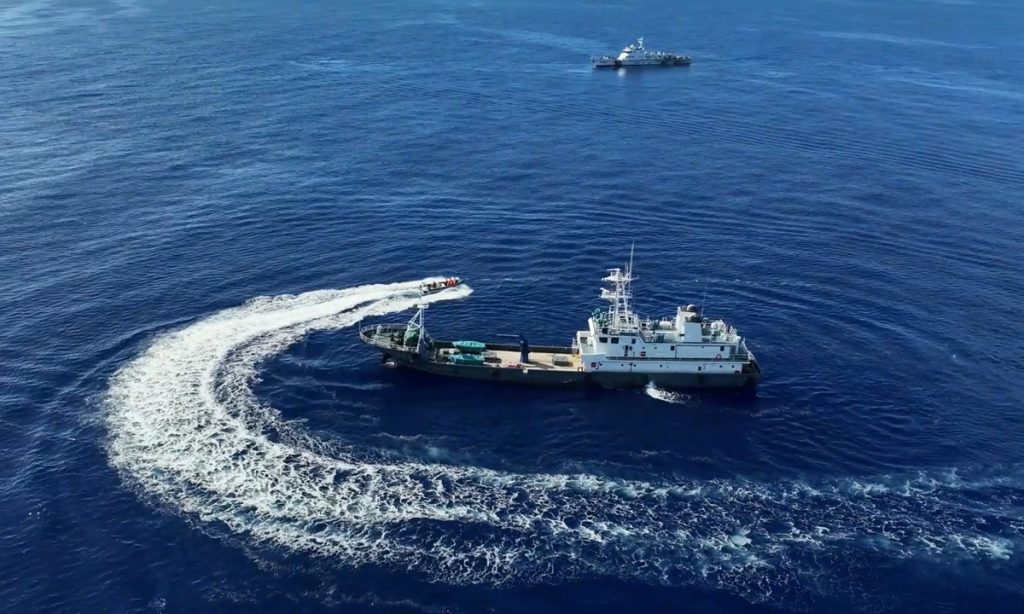
China Foreign Ministry spokesperson Mao Ning said Philippine Defense Secretary ⁠Gilberto Teodoro has repeatedly made fallacious remarks about China and his latest statements once again prove his having no gratitude for key Chinese commodities and exploiting issues of people's livelihoods to make political stunt. 

Mao made the remarks on Tuesday, commenting on media reports that Teodoro alleged at the Shangri-La Dialogue that China had provided fertilizer and fuel to the Philippines but did not show good faith on a long-term basis, and "no matter how they sugarcoat their assistance to ​us, it ⁠doesn't cut the mustard." He also claimed the Philippines were under severe threat territory-wise and politically by China.

Mao stated that Teodoro's latest words shows that he completely disregards the welfare of the Philippine people, lacks any sense of gratitude, only cares about his personal interests, and is even exploiting livelihood issues for political stunt, which damages China-Philippines relations and mutual trust, and is completely contrary to the interests of the Philippine nation and its people.

Mao further asked: The Philippine side should seriously reflect on this. If it allows such a person to do whatever he wants, how can China continue to provide material assistance to the Philippines? Who will ultimately foot the bill? Whose interests will be harmed?

Mao noted that Philippine leaders have repeatedly expressed their willingness to properly resolve differences with China and promote the easing of bilateral relations. It is hoped that the Philippines will match its words with deeds, strictly discipline its officials, and not allow a few clowns to repeatedly undermine bilateral efforts to stabilize the relationship, Mao added.

Inquiry launched into AUKUS deal including its impact on China-Australia ties; more Australians question sacrificing relations with Beijing for US interests: Chinese expert

Former Australian environment minister Peter Garrett will head up a crowd-funded review of the multi-billion-dollar AUKUS submarine deal, Australia's biggest ever defense project, with one of its questions including an examination of how the deal affects Australia's relations with China, BBC News reported. A Chinese expert said this reflects a growing number of voices within Australia questioning whether it is worthwhile to sacrifice relations with China in order to accommodate US interests.

Launched by a group of Labor veterans and public figures concerned that proper scrutiny was not applied to the deal, the inquiry will hold public hearings and take written submissions before delivering a final report by October 30, the Guardian reported.

Garrett, who served as environment minister between 2007 and 2010, said the independent inquiry into the A$368 billion ($239 billion) deal - where Australia will buy second-hand US submarines to replace its ageing fleet - was "long overdue," the BBC reported.

He also said the inquiry would consider if the submarines can be delivered on time and on budget, how nuclear waste will be managed and if Australia's defense and strategic interests are well served by the deal, the Guardian reported.

This inquiry has dealt a blow to the AUKUS pact, while also reflecting concerns among some Australian Labor Party figures over the prospects of the AUKUS nuclear submarine program, its staggering costs, distrust of the US government, and the program's implications for Australia's sovereignty, Ning Tuanhui, an associate research fellow at the China Institute of International Studies, told the Global Times on Wednesday.

After Garrett's inquiry, Labor backbencher Ed Husic urged a new vote on the future of the AUKUS submarine pact, warning the deal as it stood could impact sovereignty, news outlet The Australian reported.

Ning said these developments have left the Anthony Albanese administration caught between internal rifts within its own party and relentless opposition censure, placing the government under mounting pressure from two flanks.

"This will likewise cast tangible headwinds over the administration's future efforts to advance the pact," he added.

The BBC reported that the inquiry will ask how the deal will affect Australia's relationship with China, its largest trading partner.

The inquiry specifically calls for an assessment of AUKUS's impact on China-Australia relations, indicating that some figures within Australia are rethinking whether sacrificing ties with China to align with US geopolitical objectives truly serves Australia's national interests, Chen Hong, director of the Asia-Pacific Studies Center at East China Normal University, told the Global Times.

The AUKUS deal was announced in September 2021, and while it is not explicitly stated, it is believed to be about countering China's growing presence in the so-called Indo-Pacific region, and about the South China Sea issue, according to a BBC report.

A growing number of Australians clearly see that the US prioritizes its own interests, not those of its allies, and the consensus is also deepening that relying on the Chinese market while proactively defining China as a potential adversary is a strategic contradiction, Chen added.

Concerns are growing within Australia over the US role in and commitment to the AUKUS pact. Husic warned that Australia needs a backup plan for the AUKUS submarine agreement, arguing that sluggish US production and the "transactional nature" of the current US administration have put the multibillion-dollar defense deal at risk, per BBC News.

Arthur Rorris, the secretary of the South Coast Labour Council, which opposes the establishment of a nuclear submarine base at Port Kembla, said the proposed base was never intended for Australian submarines but "would be ceded to the US navy as a staging post for their 7th fleet," the Guardian reported.

Australia's case underscores that tying one's strategic and economic fortunes to the US at steep costs may yield heightened troubles and lingering uncertainties, serving as a sobering wake-up call for Washington's other allies, Ning said.

Xi honors role models, calls for forming mighty force to build strong nation

Chinese President Xi Jinping on Sunday called on the Chinese people to learn from heroes and role models to form a mighty force to build a strong China.

Xi, also general secretary of the Communist Party of China (CPC) Central Committee and chairman of the Central Military Commission, made the remarks at a ceremony awarding the country's highest state honors ahead of the 75th founding anniversary of the People's Republic of China (PRC).

China is in a crucial period for building a great modern socialist country in all respects and achieving national rejuvenation through Chinese modernization, Xi said.

Before his speech, Xi presented the Medal of the Republic, the Friendship Medal, and medals of national honorary titles at the Great Hall of the People.

Four people, including veteran war hero Huang Zongde and medical scientist Wang Zhenyi, were awarded the Medal of the Republic. Ten individuals, including border patrolman Bayika Kalidibek, technician Xu Zhenchao, and acclaimed actress Tian Hua, were awarded national honorary titles, Xinhua News Agency reported.

Dilma Rousseff, former Brazilian president and president of the New Development Bank, received the Friendship Medal.

President Xi extended warm congratulations and paid high respect to the recipients of China's highest state honors.

Xi said that over the past 75 years the CPC has led Chinese people of all ethnic groups in creating the twin miracles of rapid economic growth and long-term social stability.
Great times call for heroes

The presentation ceremony was held amid the jubilant atmosphere as China is celebrating the 75th anniversary of the founding of the PRC, with flower baskets, floral displays, decorative lights seen on the streets in China's capital.

Before the ceremony, the recipients of the national medals and honorary titles were escorted by a state guest motorcade to the Great Hall of the People. At the entrance to the Great Hall of the People, they were warmly welcomed by a group of children carrying flowers and national flags.

At the ceremony, President Xi hailed the earthshaking changes that have taken place in China and stated that national rejuvenation is now on an irreversible historical course.

A galaxy of heroes emerging generation after generation will ensure the lasting prosperity of the Party and the people's cause, Xi said.

The Chinese president also called on the Chinese people to learn from heroes and role models to form a mighty force to build a strong China.

He emphasized the need for people to bear in mind their aspirations, hone their skills, and make contributions to building a strong China.

He also encouraged the Chinese people to strive for extraordinary achievements at ordinary job posts and urged all to make contributions to resolve development and reform challenges, and safeguard social harmony and stability.

Speaking at the ceremony, Huang Zongde, 93, said that the honor belongs to every member of the people's armed forces and all the heroes who sacrificed their lives for China's national independence, the liberation of the people, and the endeavor to make China prosperous and strong.

Su Wei, a professor from the Party School of the CPC Chongqing Municipal Committee, told the Global Times on Sunday that the awarding of role models and heroes in various fields not only reflects China's full recognition of their contributions, but also highlights the prominent role of patriotism in advancing China's modernization.

"The Party and country have long had the tradition of establishing model of heroes. By calling on the people of the whole country to learn from them, we can better inspire the patriotism of the people and contribute more to the development of the country," he noted.

Zhu Lijia, a professor as the National Academy of Governance, said that many outstanding people's quiet dedication to the country often went unknown for a long time, and so the grand commendation at the level of national leadership has a vital importance in inspiring and motivating the Chinese people to strive for rejuvenation.

Same aspirations

While awarding Rousseff the Friendship Medal on Sunday, Xi lauded her as an outstanding representative of China's old friends and good friends who have shared the same aspirations and stood together with the Chinese people over the past 75 years.

Chinese people will never forget the international friends who have made prominent contributions to China's development and the friendship between Chinese and foreign people, Xi said.

Xi said the Chinese people stand ready to work together with people of various countries to safeguard world peace and boost common development.

Xi also called for joint efforts to build a human community with a shared future and create an even brighter future for humanity.

In her address, Rousseff said the medal fills her with immense honor, pledging continued efforts to help strengthen the mutually beneficial cooperation between Brazil and China.

In an interview with the Xinhua News Agency released on Sunday, Rousseff said she feels proud and pleased to receive the medal, adding that China's achievements toward economic, social, cultural and political modernization over the past 75 years are unprecedented in history. "China's reform and opening up never ends," said Rousseff, adding that China provides a model to the Global South for economic, political and social development.

Travel for National Day holidays expected to rise, boosting demand for relevant sectors amid policy support

The rising demand for travel during China's week-long National Day holidays starting on October 1 is expected to inject more vitality into domestic consumption, with growth foreseen in relevant sectors amid ramped-up policy support. 

Amid the peak season of "Golden September and Silver October," observers expect growth in tourism and related industries to fuel the nation's recovering consumption.

The transport sector is expected to handle 1.94 billion passenger trips nationwide during the holidays, with a daily average of 277 million trips. The daily average would be up 0.7 percent year-on-year and 19.4 percent compared with the same period in 2019, Vice Minister of Transport Li Yang said at a press conference on Friday. 

Li highlighted a growing demand for domestic and international travel during the "golden week." 

He noted that family tours and cross-provincial travel would be the mainstream options, with major destinations including such locations as Beijing, Shanghai and North China's Shanxi Province. 

As of Saturday, searches for "travel during the National Day holidays" had surged 27 times year-on-year on domestic service apps Meituan and Dianping. Bookings for natural scenic spots accounted for 29.6 percent of the total orders and remained the top choice for family tours. 

It is expected that the proportion of self-driving trips during the National Day holidays will exceed 80 percent, reaching 1.526 billion trips, Li said.

He also anticipated a rising demand for medium- and long-distance travel, as the average travel distance during the holidays is estimated to increase by about 30 percent compared with the three-day Mid-Autumn Festival break. 

As for outbound travel, Li said that neighboring Southeast Asian countries are among the highly favored attractions. 

Outbound flight and hotel bookings on Chinese online travel agency Qunar for the holiday covered nearly 1,600 cities in 144 countries and regions, the company said.

Holiday consumption will play a vital role in boosting GDP growth for the coming months, bolstered by growth in sectors such as tourism, catering, accommodation and transportation, said Wang Peng, an associate research fellow at the Beijing Academy of Social Sciences.

In the first eight months of 2024, retail sales rose by 3.4 percent year-on-year to 31.25 trillion yuan ($4.46 trillion), according to data from the National Bureau of Statistics (NBS). Online sales remained a bright spot, rising by 8.9 percent year-on-year to 9.63 trillion yuan.

In addition, the beautiful autumn weather will attract more travelers to opt for outdoor activities such as bike riding, leading to an increase in sales and production of corresponding equipment and tools, Jiang Yiyi, a vice dean of the School of Leisure Sports and Tourism at Beijing Sport University, told the Global Times on Saturday. 

Jiang noted that support measures adopted by Chinese localities and responsible authorities - such as distributing vouchers and optimizing service quality in scenic spots - have significantly stimulated tourism. 

Wang said that the implementation of dedicated measures to stimulate consumption represented by the trade-in program has been showing an effect while promoting consumption upgrading. 

However, NBS spokesperson Liu Aihua said at a separate press conference in September that the consumption recovery still faces constraints, prompting authorities to channel even more energy into strengthening consumer sentiment and stimulating domestic demand.  

The presence of improved government policies, combined with better products and services on the market, means that the potential of consumption will be unleashed at a faster pace and thus the consumer market will have a more solid foundation for recovery, Liu noted. 

Rodin-themed art center to open in Shanghai, featuring iconic works of legendary French sculptor

In soft, ambient lighting, “The Thinker” rests his fist against his chin, lost in profound contemplation. Just a few steps away, “Balzac” stands tall, head held high. These masterpieces, crafted by the legendary French artist Auguste Rodin, are quietly placed at an exhibition hall in Shanghai, inviting local visitors on a journey through the splendor of 19th-century French art.

The exhibition Rodin: A Hinge Figure towards Modernity will kick off on Saturday as the opening exhibition of the much-anticipated Centre d’ Art Rodin, or Rodin art center in Shanghai, a key cultural exchange project under the theme of the 60th anniversary of China-France diplomatic ties this year.

The exhibition showcases more than 100 authentic artworks, including sculptures, paintings, and porcelain pieces, collector and the center’s president Wu Jing said at the opening ceremony on Friday.

Some of the most emblematic works on display include Age of Bronze (large model), Monument to Balzac, and The Thinker (medium model), which are precious French national cultural properties deposited in the collection of Paris-based Rodin Museum that have been loaned to the center, Wu introduced.

For example, Age of Bronze (large model), is considered Rodin’s first truly personal work. The sensitive and vibrant modeling of the statue, which a young Belgian soldier named Auguste Ney posed for, was “the result of a close study of all the profiles of the model,” said a booklet of the exhibition.

The medium model of the world-renowned The Thinker on display, was an original size version of The Thinker that Rodin made in 1880. Years later, Rodin created the monumental version of The Thinker in 1903, which then became an iconic work in the history of world sculpture.

Notably, most exhibits are displayed openly without glass covers. “It’s a bold move, but we want to offer a perfect visiting experience,” Wu told the Global Times.

Born in Paris in 1840, Rodin is hailed as the “father of modern sculpture.” In addition to being a great sculptor, he was also a collector deeply interested in Chinese art. The exhibition also features 16 Chinese artworks and objects collected by Rodin during his lifetime, including terracotta figurines from the Sui and Tang dynasties (581-907), bronzes and porcelain pieces from Qing Dynasty (1644-1911).

The venue of the center, located by Shanghai’s iconic Huangpu River, was transformed from the former French Pavilion of the 2010 Shanghai World Expo.

Amélie Simier, director of the center’s partner Rodin Museum, said it is an ideal location for the center. “And it’s also an ideal time to open the center in Shanghai, showcasing our best sculptures and culture to Chinese visitors, to mark the 60 years anniversary of the diplomatic relationship between France and China,” Simier told the Global Times.