G7 Summit opens under growing doubts over Western unity, global relevance

As leaders gathered Monday in the French commune of Évian-les-Bains for the 2026 Group of Seven summit, the annual meeting opened under a cloud of growing skepticism.

The summit still carries the familiar markers of high diplomacy: carefully staged meetings, sweeping declarations and intense media attention. But behind the formal setting, more media outlets and observers are asking whether the club of wealthy nations has become increasingly disconnected from today's international realities.

Chinese experts told the Global Times that mechanisms such as the G7 are showing signs of becoming outdated. Rather than projecting Western unity, this year's summit exposed widening divisions across the Atlantic and a growing gap between the G7's ambitions and its ability to respond to global challenges, they said.

Divide, not unite

The summit agenda has largely centered on a tentative deal to end the Iran war, ongoing discussions regarding the Russia-Ukraine conflict and the broader Middle East crisis. Aside from G7 member states, France has invited leaders from Ukraine, India, the Republic of Korea, Kenya, Egypt, Qatar, the United Arab Emirates, to take part in this year's working session that focusing on international investment, according to media reports.

Yet after the first day of meetings, no major breakthrough had emerged. Instead, one of the segment headlines in the Associated Press' live summit coverage read: "European leaders joke with Meloni about quitting smoking."

G7 leaders also attended a working lunch to discuss the situation in the Middle East, where the conversation is expected to focus on the path ahead after the ceasefire agreement between the US and Iran, according to AP.

The US leader also told reporters that he is "not happy with the way Israel has handled themselves with Lebanon and with Hezbollah." He said Israel's Prime Minister Benjamin Netanyahu needed to be "more responsible with respect to Lebanon," according to the CNN.

In terms of the Russia-Ukraine conflict, the G7 leaders, including Trump, has gathered with Ukraine's President Volodymyr Zelenskyy for an hour and 15 minutes Tuesday morning at the summit in Evian-les-Bains. The talks focused on how to "build peace and security for Ukraine and Europe," the French organizers of the summit said, per the AP.

German Chancellor Friedrich Merz, who has had a frosty relationship with Trump, gave the US president a soccer jersey with Trump's name and the number 47 on the back, according to the AP. The shirt had the name "Trump" emblazoned on the back along with the number 47, in reference to his status as the 47th president of the US. The US is currently co-hosting the FIFA World Cup.

The AFP commented that the G7 were "seeking to find unity after a year when Trump has troubled allies with sometimes unilateral foreign policy moves and hefty tariffs on imports."

Even before this year's summit officially began, doubts over its prospects had already surfaced in US media.

In an analysis published on Sunday, The New York Times wrote that the "Group of 7 meetings once embodied the effort to sustain the global diplomatic order. This year's gathering, starting on Monday, symbolizes its fragmentation."

Recalling the 2003 G8 summit, also held in Évian-les-Bains, which managed to "maintain the veneer of like-minded countries uniting to confront the perils of an unruly world," the report argued that this year "the veneer has been stripped away."

According to the report, US President Donald Trump arrived in France to meet European leaders who no longer view Washington as a reliable partner on key issues such as climate change and security. In some cases, they regard the US itself as a threat, citing Washington's attacks on Iran, growing disdain for NATO and repeated suggestions of taking over Greenland.

The G7, previously the G8, was originally intended to play a leading role in addressing major international political and economic issues and shaping global governance. However, both its declining influence and deepening internal contradictions have made it increasingly difficult for the grouping to fulfill that role, Cui Hongjian, a professor at the Academy of Regional and Global Governance at Beijing Foreign Studies University, told the Global Times on Tuesday.

According to Cui, the effectiveness of the G7 has long depended on cooperation among its members outweighing their differences and consensus prevailing over disagreements. Yet that balance is changing. European participants increasingly find themselves making compromises to accommodate US' positions while simultaneously seeking new common objectives to divert attention from growing internal disputes and preserve the cohesion of the grouping.

At this year's summit, Cui said, issues such as Russia and energy security have become focal points. While some members have attempted to use China as a common target around which to rally consensus, so far, those efforts have been unsuccessful, he said.

Li Haidong, a professor at China Foreign Affairs University, told the Global Times on Tuesday that economic differences between the US and its European partners are becoming increasingly pronounced. While Washington has grown more skeptical of economic globalization, many European economies remain deeply dependent on it.

Such contradictions have been evident throughout this year's summit, making the G7 increasingly resemble a platform for displaying transatlantic disagreements rather than unity, Li said.

"The divisions within the G7 suggest that a cohesive and integrated West may no longer exist," Li noted.

China's presence felt despite absence

Although official summit agendas have largely avoided direct references to China, media outlets and observers have paid close attention to China's presence - and absence - throughout the gathering.

According to an AP report published on Tuesday, China's trade practices are expected to rank among the top issues discussed by leaders meeting in Évian-les-Bains. French officials indicated in pre-summit briefings that they hoped the gathering would produce a coordinated plan to address what they described as the "China threat."

The report noted that Europeans also hope to persuade Trump to stop targeting US allies like the EU and Canada with punitive tariffs and to start working with them instead to counter China.

Attempting to strengthen internal cohesion by confronting China and externalizing internal contradictions is unlikely to succeed, Li said. Without resolving the grouping's own divisions and structural problems, creating an external rival will not generate lasting unity.

"It also cannot reverse the decline of the mechanism itself," Li said.

French President Emmanuel Macron has sought to make responses to China a priority at this year's summit, according to a Politico report on Monday. However, the report noted that "the White House didn't even mention China in the list of priorities it has for the summit."

Beyond occasional remarks by French and German leaders, other participating countries, including Canada, the UK, Italy and the US, had made few public statements on China as of press time.

Some observers have focused on a different question: whether the G7 can still exercise the influence it seeks without the participation of the world's second-largest economy.

"As Trump and his G7 counterparts gather again in France from Monday, China's exclusion from the informal club's summits also looks odd, given its now immense sway over the world's economic well-being and affairs," the AP wrote in a report published Sunday.

"Put simply: Without China, does the G7 make sense?" the report asked.

China's white paper calls for joint efforts to build just, equitable global governance system

China's State Council Information Office on Wednesday released a white paper to introduce China's principles, proposals and actions on global governance, foster broader consensus within the international community, ensure more effective responses to global challenges, and build a more just and equitable global governance system.

Titled "More Just and Equitable Global Governance: China's Principles, Proposals and Actions," the paper extends to 36 pages in its English edition with more than 13,600 words. The full Chinese text totals around 20,000 Chinese characters.

Apart from the preface and conclusion, the white paper has five parts. At the beginning, it points out that global governance is a common endeavor that bears on the well-being of all humanity, and building a just and equitable global governance system is a shared vision long pursued by people from across the world.

It adds that China has always been an active participant in, contributor to, and a builder of global governance.

Respond to challenges of times

In 2025, President Xi Jinping proposed the Global Governance Initiative (GGI), which is built on five core concepts: sovereign equality, the international rule of law, multilateralism, a people-centered approach and real actions. According to the latest white paper, China's GGI was proposed to respond to the "severe and complex" challenges of the time.

These challenges, according to the white paper, include intensifying geopolitical tensions and armed conflicts, resurgence of militarism and nuclear proliferation, as well as global economic fragmentation, food and energy insecurity and the widening wealth gap.

The document also mentions the harms to the UN's authority and international laws and basic norms caused by unilateralism and hegemonism. It warned that de-globalization and protectionism are on the rise, while economic and trade issues are being politicized, instrumentalized, and weaponized.

To stabilize and improve the world, the international community needs to be more responsive to the concerns of the Global South in international affairs and fully leverage its role, said the white paper, citing examples of the historic expansion of the BRICS group, the enlarging Shanghai Cooperation Organization (SCO), and the G20's role in development and reform of the global governance system.

Facing these challenges, the white paper said the China-proposed GGI aligns with the growing trend toward greater democracy in international relations and bolsters international confidence in practicing multilateralism. It offers a clear and feasible roadmap for improving global governance, bringing valuable stability and positive energy to a turbulent world.

At a press conference to present the white paper on Wednesday, Chinese Foreign Minister Wang Yi said that the GGI has been translated from a Chinese proposal into international practice and is increasingly demonstrating strong vitality. The GGI has been endorsed by nearly 160 countries and international organizations and has received extensive and positive responses from the international community.

Some international media outlets including Reuters have noticed China's support for a greater voice for the Global South on the international stage, noting that the white paper lays out pathways to build a fairer and more equitable global governance system.

Turkey's Anadolu Agency noted that as the US and Iran are poised to sign a peace deal, China's Foreign Minister Wang Yi voiced support for a ceasefire in the Middle East and calling for coordinated efforts to lay the groundwork for a lasting regional security framework.

Wang Yiwei, professor at the School of International Studies at the Renmin University of China, told the Global Times that the GGI embodies the characteristics of Beijing's major-country diplomacy and sense of responsibility of China, which stands as the world's second-largest economy, a permanent member of the UN Security Council, the largest country of the Global South, and an ancient civilization with a time-honored history.

Taking the ongoing G7 summit in Evian, France, as an example, the expert said that a major component of the prevailing global governance deficits lies in the deficit of representation. "The bulk of existing international rules were formulated by Western countries. Yet global governance is a shared undertaking for all humanity, which cannot be addressed through blocs and alliances set up by a handful of developed nations alone," Wang Yiwei said.

According to the expert, the Western narrative of global governance mostly centers on the question of "who governs" while overlooking the fundamental issue of "governance for whom." By contrast, China's GGI highlights inclusiveness for all and the principles of extensive consultation, win-win outcomes and shared benefits. While acknowledging that countries of the Global South suffer inadequate representation and voices within global governance bodies and international organizations, the GGI does not exclude Western nations.

From roadmap to action

Beyond the clear roadmap laid out by the GGI, China has set a leading example in advancing global governance, translating its governance vision into a wide range of tangible practical measures, analysts said.

According to the press conference held by China's State Council Information Office on Wednesday, China is accelerating the establishment of the World Artificial Intelligence (AI) Cooperation Organization, Xinhua reported.

Earlier, October 2025 saw the inauguration of the International Organization for Mediation (IOMed) in China's Hong Kong Special Administrative Region, the world's first intergovernmental international legal organization dedicated to resolving international disputes through mediation.

Several months later, the World Data Organization (WDO) was established in Beijing in March, aimed at bridging the data divide, advancing global data cooperation and the digital economy. In addition, China will also host a forum on global governance in Xiong'an New Area in North China's Hebei Province this autumn, Foreign Minister Wang Yi announced in May.

Despite this progress, analysts argue that enhanced global solidarity and joint efforts are essential to improve global governance, a view echoed in a key section of the white paper.

"No country can achieve development outside the global governance system, nor can it secure a future without participating in international cooperation. It is not a matter of whether we choose it or not, multilateralism is the only viable path forward," the white paper said.

It noted that China advocates for countries to unite and cooperate, take concrete action and transform the vision and blueprint of the GGI into a roadmap and timeline for joint action.

All countries should firmly uphold the international system with the UN at its core, safeguard the international order based on international law, and uphold the basic norms governing international relations underpinned by the purposes and principles of the UN Charter, instead of reinventing the wheel, according to the white paper.

Zhu Feng, Dean of the School of International Studies at Nanjing University, told the Global Times that against the backdrop of sustained shocks to the international order and global governance, China's people-centered philosophy and commitment to multilateralism echo the shared aspirations of the international community and have garnered extensive positive responses worldwide.

"The world now stands at a historic crossroads. The Middle East situation and the Ukraine crisis keep dragging on with spillover effects, while economic globalization faces severe headwinds," Zhu said, "No nation wishes to see the world grow more divided and exclusive. To tackle all kinds of global challenges, countries must move toward each other and take coordinated joint actions."

Therefore, the most central and urgent task at present is to translate the consensus among countries on advancing global governance into tangible practical steps. In this process, China is not merely the initiator of the GGI, but also a frontrunner delivering concrete multilateral governance measures, Zhu said.

"Global governance finds its source of vitality in practice, hinges on action, and is verified by its effectiveness. A vision is realized only through concrete action. It falls on the international community to turn this vision into reality - setting common goals, embracing a problem-oriented approach and acting in concert," the white paper said.

"China stands ready to work with all parties to deliver on the GGI, uphold the central role of the UN, enable the Global South to play its pivotal role, address gaps and deficits in global governance, and strive to foster a more just and equitable global governance system," Chinese Foreign Ministry spokesperson Lin Jian said on Wednesday.

Chinese envoy calls for political solutions, holistic approach to advance peace in Middle East

China's Permanent Representative to the United Nations Fu Cong on Wednesday local time put forward proposals to advance peace in the Middle East, calling for political solutions, fairness and justice, independence and self-reliance, and addressing both symptoms and root causes, during a Security Council open debate, according to the Xinhua News Agency.

Fu said that the situation in the Middle East remains tense, undermining regional peace and stability while also affecting the global economy and energy security and harming the common interests of all countries. He urged the international community to uphold an impartial position, pool efforts to promote peace, and work toward restoring stability to the Middle East, peace to its people, and peace to the world.

He then outlined four proposals on advancing peace in the Middle East. He called for resolving disputes through political means and peaceful approaches. Fu urged all parties to abide by the purposes and principles of the UN Charter, bridge differences through dialogue and consultation, and refrain from the use or threat of force.

 He said the Security Council should fulfill its primary responsibility for maintaining international peace and security and take active and responsible actions to advance political solutions to hotspot issues. Fu called on relevant parties to the Iran-related situation to exercise calm and restraint, halt actions that could escalate tensions, and resolve differences through political and diplomatic channels. He also urged all parties involved in the Lebanon-Israel situation to immediately cease hostilities and achieve a genuine ceasefire.

Second, he called for upholding fairness and justice and safeguarding regional stability under international law. Fu said the prolonged hotspot issues  in the Middle East stem in part from a lack of justice, non-implementation of relevant Security Council resolutions, and disregard for international law. 

He stressed the need to uphold the authority of the Security Council and international law, warning against selective application and a return to the law of the jungle. He urged the international community to intensify efforts to implement the two-state solution, reject any attempt to annex Palestinian territory, and support the early establishment of an independent Palestinian state and its full UN membership.

He also stressed independence and self-reliance, and called for the building of common security through solidarity and cooperation as the third point. Fu said the path from turmoil to stability in the Middle East lies in overcoming major-power geopolitical rivalry and adopting a common, comprehensive, cooperative and sustainable security approach to build a regional framework that accommodates the legitimate concerns of all parties. 

He said Syria should adhere to the principle of “Syrian-led and Syrian-owned” governance, advance an inclusive political transition, and firmly combat terrorism. He noted that the Golan Heights are internationally recognized as Syrian territory under occupation  and called for Israel’s full withdrawal as soon as possible. He also urged all parties in Yemen to demonstrate political will, restart the peace process, and work toward reconciliation.

Fourth, he called for addressing both symptoms and root causes and promoting long-term stability through development and revitalization. Fu said the international community should deepen cooperation with Middle Eastern countries, support sustainable development and post-conflict reconstruction, and help improve livelihoods to create conditions for peace. 

He called for opposition to protectionism and unilateral actions and rejected illegal unilateral sanctions beyond the scope of Security Council resolutions. He also warned that disruptions in the Strait of Hormuz would undermine global supply chains, trade, and energy security, and called for the restoration of normal navigation.

Myanmar’s President Min Aung Hlaing to Pay a State Visit to China

At the invitation of Chinese President Xi Jinping, President of Myanmar Min Aung Hlaing will pay a state visit to China from June 15 to 19, a Chinese foreign ministry spokesperson announced on Friday.

During the visit, President Xi will hold talks with President Min Aung Hlaing. Premier Li Qiang and Zhao Leji, chairman of the Standing Committee of the National People's Congress, will meet with him respectively, Chinese foreign ministry spokesperson Lin Jian told a daily press briefing.

Noting that China and Myanmar are traditional friendly neighbors and a community with a shared future, Lin said over the 76 years since the establishment of diplomatic ties, guided by the spirit of the Five Principles of Peaceful Coexistence jointly advocated by the two sides, China and Myanmar have stood together through thick and thin, looked out for each other and forged solidarity and cooperation, promoting China-Myanmar relations to achieve considerable progress.

Lin said through President Min Aung Hlaing's visit, China looks forward to working with Myanmar to carry forward the "pauk-phaw" (fraternal) friendship, deepen the comprehensive strategic cooperative partnership, secure more tangible results in building the China-Myanmar community with a shared future, and deliver further benefits to the two peoples.

China ready to enhance cooperation with Myanmar's new government: top diplomat

Wang Yi, Chinese foreign minister and member of the Political Bureau of the Communist Party of China Central Committee, held talks with his Myanmar counterpart Tin Maung Swe in Beijing on Friday.

China stands ready to work with Myanmar's new government to strengthen high-level exchanges, enhance political mutual trust, and deepen strategic cooperation, in order to deliver more practical outcomes in building a China-Myanmar community with a shared future and to help Myanmar accelerate development, he said.

Chinese Embassy in Romania expresses serious concern, firm opposition over Romanian lawmaker's visit to Taiwan region and related remarks

The Chinese Embassy in Romania on Saturday expressed serious concern and firm opposition to a recent visit to Taiwan region by Romanian lawmaker Alexandru Muraru and his subsequent erroneous remarks concerning Taiwan region, saying his actions violated Romania's official policy and advocated for the DPP authorities' "Taiwan independence" separatist agenda.

According to the statement published on the embassy's official WeChat account, a spokesperson for the embassy said Taiwan is part of China, and both the mainland and Taiwan belong to one China. This is a historical and legal fact, the true status quo across the Taiwan Straits, and an important component of the post-World War II international order.

The spokesperson said that recognizing the government of the People's Republic of China as the sole legal government representing the whole of China and adhering to the one-China principle are widely accepted by the international community and constitute a basic norm governing international relations.

Romania established diplomatic relations with the People's Republic of China in 1949, the spokesperson noted, adding that the one-China principle has served as the political foundation of bilateral relations and ensured the steady development of China-Romania ties despite changes in the international landscape.

The statement noted that the Taiwan question is China's internal affair and lies at the core of China's core interests. "Just as a province or region of Romania cannot separate from the country for any reason, Taiwan cannot separate from China for any reason," the spokesperson said.

Quoting the Chinese saying, "Do not impose on others what you yourself do not desire," the spokesperson said Muraru's actions constituted blatant interference in China's internal affairs and support for "Taiwan independence," adding that such behavior not only runs counter to basic diplomatic norms but also raises questions about whether he is genuinely acting in Romania's interests.

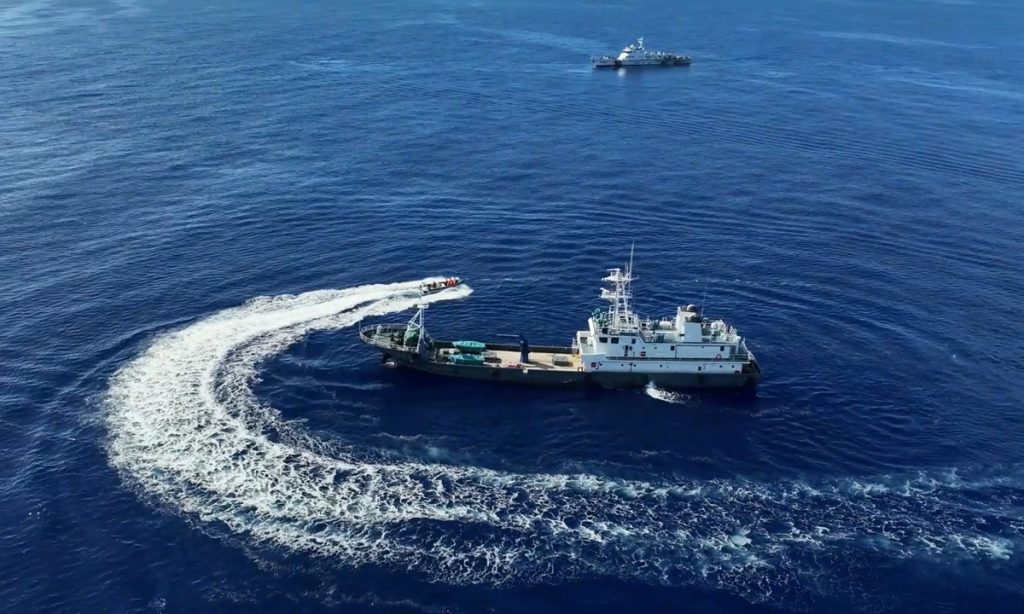
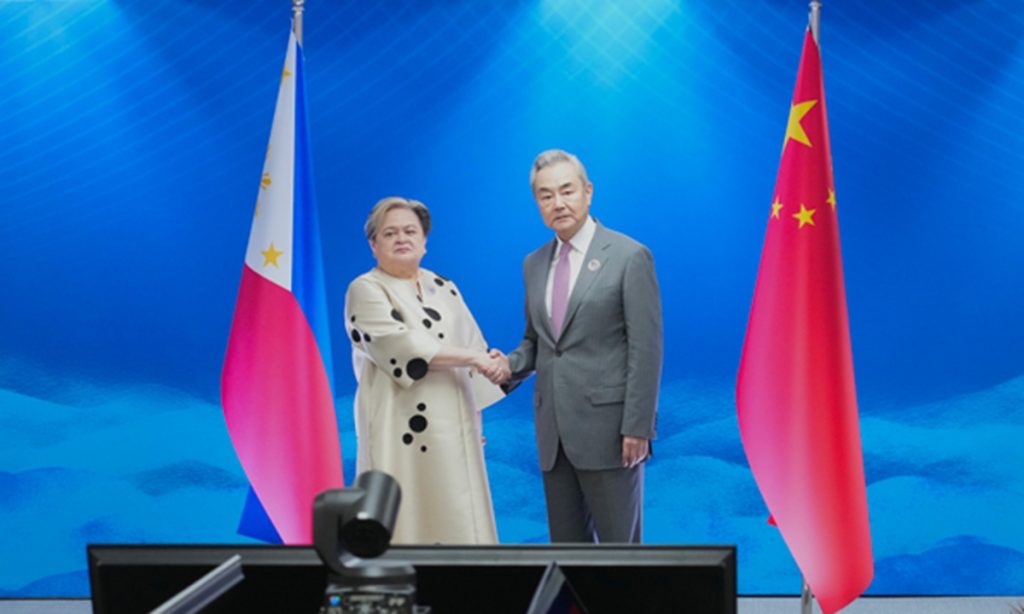
China FM slams Philippine Defense Secretary Teodoro of having ​no gratitude for Chinese aid, exploiting livelihood issues for political stunt

China Foreign Ministry spokesperson Mao Ning said Philippine Defense Secretary ⁠Gilberto Teodoro has repeatedly made fallacious remarks about China and his latest statements once again prove his having no gratitude for key Chinese commodities and exploiting issues of people's livelihoods to make political stunt. 

Mao made the remarks on Tuesday, commenting on media reports that Teodoro alleged at the Shangri-La Dialogue that China had provided fertilizer and fuel to the Philippines but did not show good faith on a long-term basis, and "no matter how they sugarcoat their assistance to ​us, it ⁠doesn't cut the mustard." He also claimed the Philippines were under severe threat territory-wise and politically by China.

Mao stated that Teodoro's latest words shows that he completely disregards the welfare of the Philippine people, lacks any sense of gratitude, only cares about his personal interests, and is even exploiting livelihood issues for political stunt, which damages China-Philippines relations and mutual trust, and is completely contrary to the interests of the Philippine nation and its people.

Mao further asked: The Philippine side should seriously reflect on this. If it allows such a person to do whatever he wants, how can China continue to provide material assistance to the Philippines? Who will ultimately foot the bill? Whose interests will be harmed?

Mao noted that Philippine leaders have repeatedly expressed their willingness to properly resolve differences with China and promote the easing of bilateral relations. It is hoped that the Philippines will match its words with deeds, strictly discipline its officials, and not allow a few clowns to repeatedly undermine bilateral efforts to stabilize the relationship, Mao added.

Inquiry launched into AUKUS deal including its impact on China-Australia ties; more Australians question sacrificing relations with Beijing for US interests: Chinese expert

Former Australian environment minister Peter Garrett will head up a crowd-funded review of the multi-billion-dollar AUKUS submarine deal, Australia's biggest ever defense project, with one of its questions including an examination of how the deal affects Australia's relations with China, BBC News reported. A Chinese expert said this reflects a growing number of voices within Australia questioning whether it is worthwhile to sacrifice relations with China in order to accommodate US interests.

Launched by a group of Labor veterans and public figures concerned that proper scrutiny was not applied to the deal, the inquiry will hold public hearings and take written submissions before delivering a final report by October 30, the Guardian reported.

Garrett, who served as environment minister between 2007 and 2010, said the independent inquiry into the A$368 billion ($239 billion) deal - where Australia will buy second-hand US submarines to replace its ageing fleet - was "long overdue," the BBC reported.

He also said the inquiry would consider if the submarines can be delivered on time and on budget, how nuclear waste will be managed and if Australia's defense and strategic interests are well served by the deal, the Guardian reported.

This inquiry has dealt a blow to the AUKUS pact, while also reflecting concerns among some Australian Labor Party figures over the prospects of the AUKUS nuclear submarine program, its staggering costs, distrust of the US government, and the program's implications for Australia's sovereignty, Ning Tuanhui, an associate research fellow at the China Institute of International Studies, told the Global Times on Wednesday.

After Garrett's inquiry, Labor backbencher Ed Husic urged a new vote on the future of the AUKUS submarine pact, warning the deal as it stood could impact sovereignty, news outlet The Australian reported.

Ning said these developments have left the Anthony Albanese administration caught between internal rifts within its own party and relentless opposition censure, placing the government under mounting pressure from two flanks.

"This will likewise cast tangible headwinds over the administration's future efforts to advance the pact," he added.

The BBC reported that the inquiry will ask how the deal will affect Australia's relationship with China, its largest trading partner.

The inquiry specifically calls for an assessment of AUKUS's impact on China-Australia relations, indicating that some figures within Australia are rethinking whether sacrificing ties with China to align with US geopolitical objectives truly serves Australia's national interests, Chen Hong, director of the Asia-Pacific Studies Center at East China Normal University, told the Global Times.

The AUKUS deal was announced in September 2021, and while it is not explicitly stated, it is believed to be about countering China's growing presence in the so-called Indo-Pacific region, and about the South China Sea issue, according to a BBC report.

A growing number of Australians clearly see that the US prioritizes its own interests, not those of its allies, and the consensus is also deepening that relying on the Chinese market while proactively defining China as a potential adversary is a strategic contradiction, Chen added.

Concerns are growing within Australia over the US role in and commitment to the AUKUS pact. Husic warned that Australia needs a backup plan for the AUKUS submarine agreement, arguing that sluggish US production and the "transactional nature" of the current US administration have put the multibillion-dollar defense deal at risk, per BBC News.

Arthur Rorris, the secretary of the South Coast Labour Council, which opposes the establishment of a nuclear submarine base at Port Kembla, said the proposed base was never intended for Australian submarines but "would be ceded to the US navy as a staging post for their 7th fleet," the Guardian reported.

Australia's case underscores that tying one's strategic and economic fortunes to the US at steep costs may yield heightened troubles and lingering uncertainties, serving as a sobering wake-up call for Washington's other allies, Ning said.

Rare panda without signature ‘black eye makeup’ spotted again in SW China

Newly released footage from the Wolong area of Giant Panda National Park in Southwest China's Sichuan Province shows the world's only known wild white panda wandering across snow-blanketed forests and bamboo groves, chinanews.com reported. 

This was the first time in several years that the rare albino giant panda has been fully captured by an infrared-triggered camera equipped with real-time transmission capabilities, the report said.

The footage shows the all-white giant panda calmly roaming through dense forests and bamboo groves, pausing at times to forage for food and patrol its habitat. 

Compared with its appearance as a cub when first discovered in 2019, the white giant panda has now reached adulthood, and appears healthy and agile. It appears to have adapted exceptionally well to the wild, and its natural habitat independently, according to chinanews.com. 

According to Tan Yingchun, project lead of the conservation and research program for white giant pandas at the Wolong National Nature Reserve, judging by footage captured by infrared cameras, this white giant panda boasts a robust physique, and the fur of its limbs tint faint golden-brown    in adulthood.

The panda is seen moving solo in every recorded clip, leading researchers to estimate its age at around 9 and conclude that it has long been fully independent.

Xi encourages children to carry forward revolutionary traditions

Xi Jinping, general secretary of the Communist Party of China (CPC) Central Committee, has called for inheriting revolutionary traditions in a reply letter to student docents at the memorials of the birthplaces of the CPC in east China's Shanghai and Zhejiang Province.

Xi, also Chinese president and chairman of the Central Military Commission, encouraged them to build knowledge and enhance capabilities, and extended International Children's Day greetings to children nationwide.