At the invitation of Chinese President Xi Jinping, President of Myanmar Min Aung Hlaing will pay a state visit to China from June 15 to 19, a Chinese foreign ministry spokesperson announced on Friday.
During the visit, President Xi will hold talks with President Min Aung Hlaing. Premier Li Qiang and Zhao Leji, chairman of the Standing Committee of the National People's Congress, will meet with him respectively, Chinese foreign ministry spokesperson Lin Jian told a daily press briefing.
Noting that China and Myanmar are traditional friendly neighbors and a community with a shared future, Lin said over the 76 years since the establishment of diplomatic ties, guided by the spirit of the Five Principles of Peaceful Coexistence jointly advocated by the two sides, China and Myanmar have stood together through thick and thin, looked out for each other and forged solidarity and cooperation, promoting China-Myanmar relations to achieve considerable progress.
Lin said through President Min Aung Hlaing's visit, China looks forward to working with Myanmar to carry forward the "pauk-phaw" (fraternal) friendship, deepen the comprehensive strategic cooperative partnership, secure more tangible results in building the China-Myanmar community with a shared future, and deliver further benefits to the two peoples.
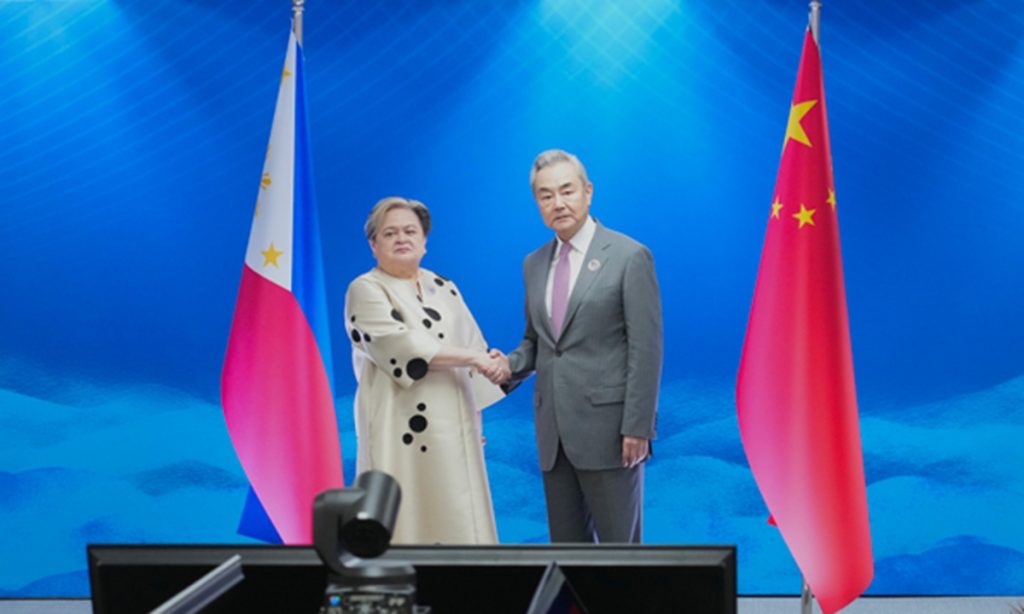
Wang Yi, Chinese foreign minister and member of the Political Bureau of the Communist Party of China Central Committee, held talks with his Myanmar counterpart Tin Maung Swe in Beijing on Friday.
China stands ready to work with Myanmar's new government to strengthen high-level exchanges, enhance political mutual trust, and deepen strategic cooperation, in order to deliver more practical outcomes in building a China-Myanmar community with a shared future and to help Myanmar accelerate development, he said.
The Chinese Embassy in Romania on Saturday expressed serious concern and firm opposition to a recent visit to Taiwan region by Romanian lawmaker Alexandru Muraru and his subsequent erroneous remarks concerning Taiwan region, saying his actions violated Romania's official policy and advocated for the DPP authorities' "Taiwan independence" separatist agenda.
According to the statement published on the embassy's official WeChat account, a spokesperson for the embassy said Taiwan is part of China, and both the mainland and Taiwan belong to one China. This is a historical and legal fact, the true status quo across the Taiwan Straits, and an important component of the post-World War II international order.
The spokesperson said that recognizing the government of the People's Republic of China as the sole legal government representing the whole of China and adhering to the one-China principle are widely accepted by the international community and constitute a basic norm governing international relations.
Romania established diplomatic relations with the People's Republic of China in 1949, the spokesperson noted, adding that the one-China principle has served as the political foundation of bilateral relations and ensured the steady development of China-Romania ties despite changes in the international landscape.
The statement noted that the Taiwan question is China's internal affair and lies at the core of China's core interests. "Just as a province or region of Romania cannot separate from the country for any reason, Taiwan cannot separate from China for any reason," the spokesperson said.
Quoting the Chinese saying, "Do not impose on others what you yourself do not desire," the spokesperson said Muraru's actions constituted blatant interference in China's internal affairs and support for "Taiwan independence," adding that such behavior not only runs counter to basic diplomatic norms but also raises questions about whether he is genuinely acting in Romania's interests.
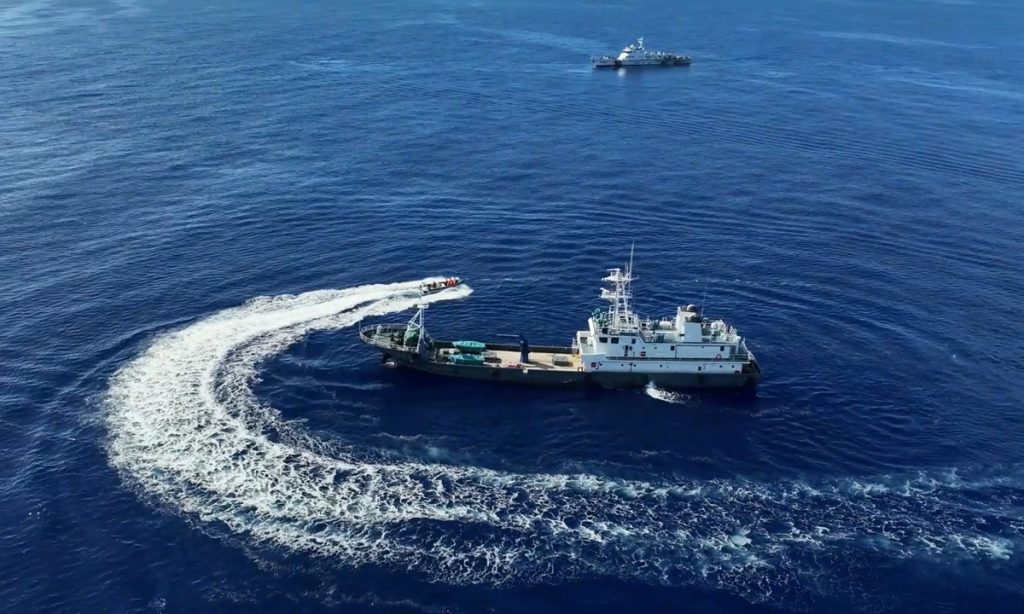
China Foreign Ministry spokesperson Mao Ning said Philippine Defense Secretary Gilberto Teodoro has repeatedly made fallacious remarks about China and his latest statements once again prove his having no gratitude for key Chinese commodities and exploiting issues of people's livelihoods to make political stunt.
Mao made the remarks on Tuesday, commenting on media reports that Teodoro alleged at the Shangri-La Dialogue that China had provided fertilizer and fuel to the Philippines but did not show good faith on a long-term basis, and "no matter how they sugarcoat their assistance to us, it doesn't cut the mustard." He also claimed the Philippines were under severe threat territory-wise and politically by China.
Mao stated that Teodoro's latest words shows that he completely disregards the welfare of the Philippine people, lacks any sense of gratitude, only cares about his personal interests, and is even exploiting livelihood issues for political stunt, which damages China-Philippines relations and mutual trust, and is completely contrary to the interests of the Philippine nation and its people.
Mao further asked: The Philippine side should seriously reflect on this. If it allows such a person to do whatever he wants, how can China continue to provide material assistance to the Philippines? Who will ultimately foot the bill? Whose interests will be harmed?
Mao noted that Philippine leaders have repeatedly expressed their willingness to properly resolve differences with China and promote the easing of bilateral relations. It is hoped that the Philippines will match its words with deeds, strictly discipline its officials, and not allow a few clowns to repeatedly undermine bilateral efforts to stabilize the relationship, Mao added.
Former Australian environment minister Peter Garrett will head up a crowd-funded review of the multi-billion-dollar AUKUS submarine deal, Australia's biggest ever defense project, with one of its questions including an examination of how the deal affects Australia's relations with China, BBC News reported. A Chinese expert said this reflects a growing number of voices within Australia questioning whether it is worthwhile to sacrifice relations with China in order to accommodate US interests.
Launched by a group of Labor veterans and public figures concerned that proper scrutiny was not applied to the deal, the inquiry will hold public hearings and take written submissions before delivering a final report by October 30, the Guardian reported.
Garrett, who served as environment minister between 2007 and 2010, said the independent inquiry into the A$368 billion ($239 billion) deal - where Australia will buy second-hand US submarines to replace its ageing fleet - was "long overdue," the BBC reported.
He also said the inquiry would consider if the submarines can be delivered on time and on budget, how nuclear waste will be managed and if Australia's defense and strategic interests are well served by the deal, the Guardian reported.
This inquiry has dealt a blow to the AUKUS pact, while also reflecting concerns among some Australian Labor Party figures over the prospects of the AUKUS nuclear submarine program, its staggering costs, distrust of the US government, and the program's implications for Australia's sovereignty, Ning Tuanhui, an associate research fellow at the China Institute of International Studies, told the Global Times on Wednesday.
After Garrett's inquiry, Labor backbencher Ed Husic urged a new vote on the future of the AUKUS submarine pact, warning the deal as it stood could impact sovereignty, news outlet The Australian reported.
Ning said these developments have left the Anthony Albanese administration caught between internal rifts within its own party and relentless opposition censure, placing the government under mounting pressure from two flanks.
"This will likewise cast tangible headwinds over the administration's future efforts to advance the pact," he added.
The BBC reported that the inquiry will ask how the deal will affect Australia's relationship with China, its largest trading partner.
The inquiry specifically calls for an assessment of AUKUS's impact on China-Australia relations, indicating that some figures within Australia are rethinking whether sacrificing ties with China to align with US geopolitical objectives truly serves Australia's national interests, Chen Hong, director of the Asia-Pacific Studies Center at East China Normal University, told the Global Times.
The AUKUS deal was announced in September 2021, and while it is not explicitly stated, it is believed to be about countering China's growing presence in the so-called Indo-Pacific region, and about the South China Sea issue, according to a BBC report.
A growing number of Australians clearly see that the US prioritizes its own interests, not those of its allies, and the consensus is also deepening that relying on the Chinese market while proactively defining China as a potential adversary is a strategic contradiction, Chen added.
Concerns are growing within Australia over the US role in and commitment to the AUKUS pact. Husic warned that Australia needs a backup plan for the AUKUS submarine agreement, arguing that sluggish US production and the "transactional nature" of the current US administration have put the multibillion-dollar defense deal at risk, per BBC News.
Arthur Rorris, the secretary of the South Coast Labour Council, which opposes the establishment of a nuclear submarine base at Port Kembla, said the proposed base was never intended for Australian submarines but "would be ceded to the US navy as a staging post for their 7th fleet," the Guardian reported.
Australia's case underscores that tying one's strategic and economic fortunes to the US at steep costs may yield heightened troubles and lingering uncertainties, serving as a sobering wake-up call for Washington's other allies, Ning said.
In the scientific version of her obituary, Dolly the Sheep was reported to have suffered from severe arthritis in her knees. The finding and Dolly’s early death from an infection led many researchers to think that cloning might cause animals to age prematurely.
But new X-rays of Dolly’s skeleton and those of other cloned sheep and Dolly’s naturally conceived daughter Bonnie indicate that the world’s first cloned mammal had the joints of normal sheep of her age. Just like other sheep, Dolly had a little bit of arthritis in her hips, knees and elbows, developmental biologist Kevin Sinclair of the University of Nottingham in England and colleagues report November 23 in Scientific Reports. The researchers decided to reexamine Dolly’s remains after finding that her cloned “sisters” have aged normally and didn’t have massive arthritis (SN: 8/20/16, p. 6). No formal records of Dolly’s original arthritis exams were kept, so Sinclair and colleagues got Dolly’s and Bonnie’s skeletons and those of two other cloned sheep, Megan and Morag, from the National Museums Scotland in Edinburgh. Megan and Bonnie were both older than Dolly at the time of their deaths and had more bone damage than Dolly did. Morag died younger and had less damage. Dolly’s arthritis levels were similar to those of naturally conceived sheep her age, indicating that cloning wasn’t to blame. “If there were a direct link with cloning and osteoarthritis, we would have expected to find a lot worse, and it would be more extensive and have a different distribution than what we’re finding in ordinary sheep,” says study coauthor Sandra Corr, a veterinary orthopedic specialist at the University of Glasgow in Scotland. Dolly’s slightly creaky joints may have stemmed from giving birth to six lambs, including Bonnie. Pregnancy is a risk factor for arthritis in sheep.
For decades, the name “virus” meant small and simple. Not anymore. Meet the giants.
Today, scientists are finding ever bigger viruses that pack impressive amounts of genetic material. The era of the giant virus began in 2003 with the discovery of the first Mimivirus (SN: 5/23/09, p. 9). The viral titan is about 750 nanometers across with a genetic pantry boasting around 1.2 million base pairs of DNA, the information-toting bits often represented with A, T, C and G. Influenza A, for example, is roughly 100 nanometers across with only about 13,500 base pairs of genetic material.
In 2009, another giant virus called Marseillevirus was identified. It is different enough from mimiviruses to earn its own family. Since 2013, mega-sized viruses falling into another eight potential virus families have been found, showcasing a long-unexplored viral diversity, researchers reported last year in Annual Review of Virology and in January in Frontiers in Microbiology.
Giant viruses mostly come in two shapes: polyhedral capsules and egglike ovals. But one, Mollivirus, skews more spherical. Pacmanvirus was named for the broken appearance of its outer shell. Both represent potential families. Two newly discovered members of the mimivirus family, both called tupanviruses and both with tails, have the most complete set of genes related to assembling proteins yet seen in viruses (SN Online: 2/27/18). Once unheard of, giant viruses may be common in water and soils worldwide. Only time — and more discoveries — will tell. Virus length and genome size for a representative from each of two recognized giant virus families (mimivirus and marseillevirus families) and eight potential families are shown. Circles are scaled to genome size and shaded by size range, with influenza A and E. coli bacterium included for comparison. Years indicate when the first viruses were described.
Graphic: C. Chang; Sources: P. Colson, B. La Scola and D. Raoult/Annual Review of Virology 2017; J. Andreani et al/Frontiers in Microbiology 2018
When you’re stressed and anxious, you might feel your heart race. Is your heart racing because you’re afraid? Or does your speeding heart itself contribute to your anxiety? Both could be true, a new study in mice suggests.
By artificially increasing the heart rates of mice, scientists were able to increase anxiety-like behaviors — ones that the team then calmed by turning off a particular part of the brain. The study, published in the March 9 Nature, shows that in high-risk contexts, a racing heart could go to your head and increase anxiety. The findings could offer a new angle for studying and, potentially, treating anxiety disorders. The idea that body sensations might contribute to emotions in the brain goes back at least to one of the founders of psychology, William James, says Karl Deisseroth, a neuroscientist at Stanford University. In James’ 1890 book The Principles of Psychology, he put forward the idea that emotion follows what the body experiences. “We feel sorry because we cry, angry because we strike, afraid because we tremble,” James wrote.
The brain certainly can sense internal body signals, a phenomenon called interoception. But whether those sensations — like a racing heart — can contribute to emotion is difficult to prove, says Anna Beyeler, a neuroscientist at the French National Institute of Health and Medical Research in Bordeaux. She studies brain circuitry related to emotion and wrote a commentary on the new study but was not involved in the research. “I’m sure a lot of people have thought of doing these experiments, but no one really had the tools,” she says.
Deisseroth has spent his career developing those tools. He is one of the scientists who developed optogenetics — a technique that uses viruses to modify the genes of specific cells to respond to bursts of light (SN: 6/18/21; SN: 1/15/10). Scientists can use the flip of a light switch to activate or suppress the activity of those cells. In the new study, Deisseroth and his colleagues used a light attached to a tiny vest over a mouse’s genetically engineered heart to change the animal’s heart rate. When the light was off, a mouse’s heart pumped at about 600 beats per minute. But when the team turned on a light that flashed at 900 beats per minutes, the mouse’s heartbeat followed suit. “It’s a nice reasonable acceleration, [one a mouse] would encounter in a time of stress or fear,” Deisseroth explains.
When the mice felt their hearts racing, they showed anxiety-like behavior. In risky scenarios — like open areas where a little mouse might be someone’s lunch — the rodents slunk along the walls and lurked in darker corners. When pressing a lever for water that could sometimes be coupled with a mild shock, mice with normal heart rates still pressed without hesitation. But mice with racing hearts decided they’d rather go thirsty.
“Everybody was expecting that, but it’s the first time that it has been clearly demonstrated,” Beyeler says. The researchers also scanned the animals’ brains to find areas that might be processing the increased heart rate. One of the biggest signals, Deisseroth says, came from the posterior insula (SN: 4/25/16). “The insula was interesting because it’s highly connected with interoceptive circuitry,” he explains. “When we saw that signal, [our] interest was definitely piqued.”
Using more optogenetics, the team reduced activity in the posterior insula, which decreased the mice’s anxiety-like behaviors. The animals’ hearts still raced, but they behaved more normally, spending some time in open areas of mazes and pressing levers for water without fear. A lot of people are very excited about the work, says Wen Chen, the branch chief of basic medicine research for complementary and integrative health at the National Center for Complementary and Integrative Health in Bethesda, Md. “No matter what kind of meetings I go into, in the last two days, everybody brought up this paper,” says Chen, who wasn’t involved in the research.
The next step, Deisseroth says, is to look at other parts of the body that might affect anxiety. “We can feel it in our gut sometimes, or we can feel it in our neck or shoulders,” he says. Using optogenetics to tense a mouse’s muscles, or give them tummy butterflies, might reveal other pathways that produce fearful or anxiety-like behaviors.
Understanding the link between heart and head could eventually factor into how doctors treat panic and anxiety, Beyeler says. But the path between the lab and the clinic, she notes, is much more convoluted than that of the heart to the head.
An experimental treatment for endometriosis, a painful gynecological disease that affects some 190 million people worldwide, may one day offer new hope for easing symptoms.
Monthly antibody injections reversed telltale signs of endometriosis in monkeys, researchers report February 22 in Science Translational Medicine. The antibody targets IL-8, a molecule that whips up inflammation inside the scattered, sometimes bleeding lesions that mark the disease. After neutralizing IL-8, those hallmark lesions shrink, the team found.
The new treatment is “pretty potent,” says Philippa Saunders, a reproductive scientist at the University of Edinburgh who was not involved with work. The study’s authors haven’t reported a cure, she points out, but their antibody does seem to have an impact. “I think it’s really very promising,” she says.
Many scientists think endometriosis occurs when bits of the uterine lining — the endometrium — slough off during menstruation. Instead of exiting via the vagina, they voyage in the other direction: up through the fallopian tubes. Those bits of tissue then trespass through the body, sprouting lesions where they land. They’ll glom onto the ovaries, fallopian tubes, bladder and other spots outside of the uterus and take on a life of their own, Saunders says. The lesions can grow nerve cells, form tough nubs of tissue and even bleed during menstrual cycles. They can also kick off chronic bouts of pelvic pain. If you have endometriosis, you can experience “pain when you urinate, pain when you defecate, pain when you have sex, pain when you move around,” Saunders says. People with the disease can also struggle with infertility and depression, she adds. “It’s really nasty.” Once diagnosed, patients face a dearth of treatment options — there’s no cure, only therapies to alleviate symptoms. Surgery to remove lesions can help, but symptoms often come back.
The disease affects at least 10 percent of girls, women and transgender men in their reproductive years, Saunders says. And people typically suffer for years — about eight on average — before a diagnosis. “Doctors consider menstrual pelvic pain a very common thing,” says Ayako Nishimoto-Kakiuchi, a pharmacologist at Chugai Pharmaceutical Co. Ltd. in Tokyo. Endometriosis “is underestimated in the clinic,” she says. “I strongly believe that this disease has been understudied.”
Hormonal drugs that stop ovulation and menstruation can also offer relief, says Serdar Bulun, a reproductive endocrinologist at Northwestern University Feinberg School of Medicine in Chicago not involved with the new study. But those drugs come with side effects and aren’t ideal for people trying to become pregnant. “I see these patients day in and day out,” he says. “I see how much they suffer, and I feel like we are not doing enough.”
Nishimoto-Kakiuchi’s team engineered an antibody that grabs onto the inflammatory factor IL-8, a protein that scientists have previously fingered as one potential culprit in the disease. The antibody acts like a garbage collector, Nishimoto-Kakiuchi says. It grabs IL-8, delivers it to the cell’s waste disposal machinery, and then heads out to snare more IL-8.
The team tested the antibody in cynomolgus monkeys that were surgically modified to have the disease. (Endometriosis rarely shows up spontaneously in these monkeys, the scientists discovered previously after screening more than 600 females.) The team treated 11 monkeys with the antibody injection once a month for six months. In these animals, lesions shriveled and the adhesive tissue that glues them to the body thinned out, too. Before this study, Nishimoto-Kakiuchi says, the team didn’t think such signs of endometriosis were reversible. Her company has now started a Phase I clinical trial to test the safety of therapy in humans. The treatment is one of several endometriosis therapies scientists are testing (SN: 7/19/19) . Other trials will test new hormonal drugs, robot-assisted surgery and behavioral interventions.
Doctors need new options to help people with the disease, Saunders says. “There’s a huge unmet clinical need.”
SpaceX’s rapidly growing fleet of Starlink internet satellites now make up half of all active satellites in Earth orbit.
On February 27, the aerospace company launched 21 new satellites to join its broadband internet Starlink fleet. That brought the total number of active Starlink satellites to 3,660, or about 50 percent of the nearly 7,300 active satellites in orbit, according to analysis by astronomer Jonathan McDowell using data from SpaceX and the U.S. Space Force. “These big low-orbit internet constellations have come from nowhere in 2019, to dominating the space environment in 2023,” says McDowell, of the Harvard-Smithsonian Center for Astrophysics in Cambridge, Mass. “It really is a massive shift and a massive industrialization of low orbit.”
SpaceX has been launching Starlink satellites since 2019 with the goal of bringing broadband internet to remote parts of the globe. And for just as long, astronomers have been warning that the bright satellites could mess up their view of the cosmos by leaving streaks on telescope images as they glide past (SN: 3/12/20).
Even the Hubble Space Telescope, which orbits more than 500 kilometers above the Earth’s surface, is vulnerable to these satellite streaks, as well as those from other satellite constellations. From 2002 to 2021, the percentage of Hubble images affected by light from low-orbit satellites increased by about 50 percent, astronomer Sandor Kruk of the Max-Planck Institute for Extraterrestrial Physics in Garching, Germany, and colleagues report March 2 in Nature Astronomy.
The number of images partially blocked by satellites is still small, the team found, rising from nearly 3 percent of images taken between 2002 and 2005 to just over 4 percent between 2018 and 2021 for one of Hubble’s cameras. But there are already thousands more Starlink satellites now than there were in 2021.
“The fraction of [Hubble] images crossed by satellites is currently small with a negligible impact on science,” Kruk and colleagues write. “However, the number of satellites and space debris will only increase in the future.” The team predicts that by the 2030s, the probability of a satellite crossing Hubble’s field of view any time it takes an image will be between 20 and 50 percent. The sudden jump in Starlink satellites also poses a problem for space traffic, says astronomer Samantha Lawler of the University of Regina in Canada. Starlink satellites all orbit at a similar distance from Earth, just above 500 kilometers.
“Starlink is the densest patch of space that has ever existed,” Lawler says. The satellites are constantly navigating out of each other’s way to avoid collisions (SN: 2/12/09). And it’s a popular orbital altitude — Hubble is there, and so is the International Space Station and the Chinese space station. “If there is some kind of collision [between Starlinks], some kind of mishap, it could immediately affect human lives,” Lawler says.
SpaceX launches Starlink satellites roughly once per week — it launched 51 more on March 3. And they’re not the only company launching constellations of internet satellites. By the 2030s, there could be 100,000 satellites crowding low Earth orbit.
So far, there are no international regulations to curb the number of satellites a private company can launch or to limit which orbits they can occupy.
“The speed of commercial development is much faster than the speed of regulation change,” McDowell says. “There needs to be an overhaul of space traffic management and space regulation generally to cope with these massive commercial projects.”