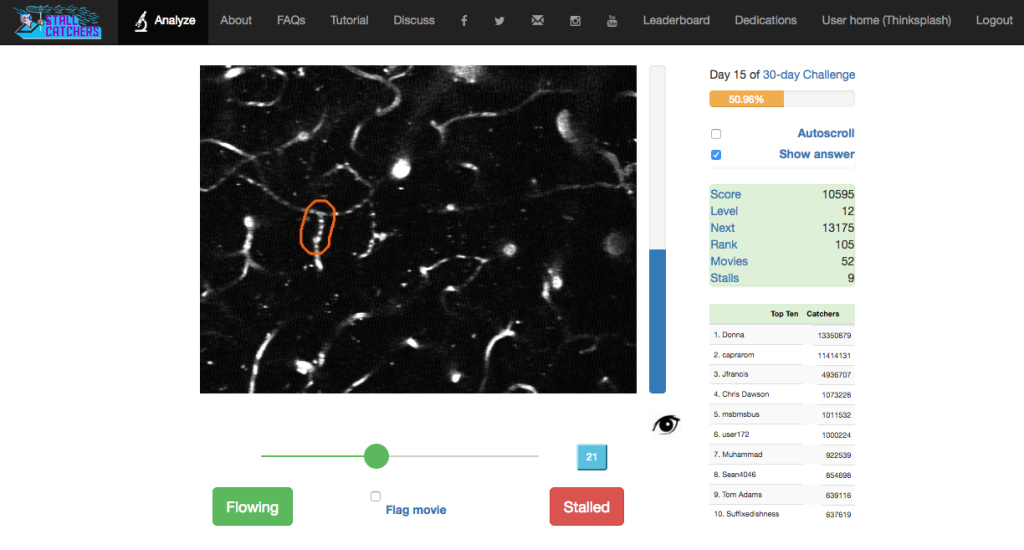
Traffic jams in the brain’s blood supply may play a role in Alzheimer’s disease. A new online game turns people at home into amateur traffic cops. This policing, which involves spotting hard-to-see sluggishness in tiny capillaries in mice, may ultimately help scientists better understand, and perhaps even treat, Alzheimer’s, a devastating disorder that affects over 5 million Americans.
The science behind the game, called Stall Catchers, comes from Cornell University. Chris Schaffer, Nozomi Nishimura and colleagues found that mice designed to exhibit symptoms similar to Alzheimer’s have more blocked blood vessels in their brains than regular mice. That difference can deprive the brain of sustenance and may be a key to understanding how Alzheimer’s damages the brain, the researchers suspect. But finding congested capillaries is a slog. Computers haven’t been up to snuff, and experts could spend an entire year analyzing the thousands of microscope images needed to amass enough data to explore links between Alzheimer’s and blocked vessels. “I thought, if we could change that, it would be tremendous,” says Pietro Michelucci, director of the Human Computation Institute in Fairfax, Va. The institute is a nonprofit organization that runs the EyesOnALZ program, which aims to crowdsource Alzheimer’s research.
That’s where StallCatchers.com comes in. The website asks players to sift through short black-and-white videos of real mouse brains, on the prowl for blocked blood vessels. In the videos, moving blood appears white. But stationary black segments that appear between two white segments signal trouble — a stall. Players rack up points and ascend levels as they classify vessels. With practice, the task gets easier. And people who suffer from performance anxiety shouldn’t fret; each video will be scrutinized by multiple users to get the final verdict. With a little help from the crowd, “not only do [researchers] get answers faster, but they can ask more questions,” Michelucci says.
So far, nearly 1,000 users have played Stall Catchers, Michelucci says. Those players are beginning to generate data that will let researchers see how good these amateur traffic cops are. With luck, their eyes will help unstall the fight against Alzheimer’s.
NEW ORLEANS — Popular heartburn drugs — already under investigation for possible links to dementia, kidney and heart problems (SN: 6/11/16, p. 8) — have a new health concern to add to the list. An analysis of almost 250,000 medical records in Denmark has found an association with stroke.
Researchers from the Danish Heart Foundation in Copenhagen studied patients undergoing gastric endoscopy from 1997 to 2012. About 9,500 of all patients studied suffered from ischemic strokes, which occur when a blood clot blocks a blood vessel in the brain.
Overall, the risk of stroke was 21 percent higher in patients taking a proton pump inhibitor, a drug that relieves heartburn, the researchers reported November 15 during the American Heart Association’s annual meeting. While those patients also tended to be older and sicker to start with, the level of risk was associated with dose, the researchers found. People taking the lowest drug doses (between 10 and 20 milligrams a day, depending on the drug) did not have a higher risk. At the highest doses, though, Prevacid (more than 60 mg/day) carried a 30 percent higher risk and Protonix (more than 80 mg/day) a 94 percent higher risk. For Prilosec and Nexium, stroke risk fell within that range.
Introduced in the 1980s, proton pump inhibitors are available in both prescription and over-the-counter forms. While they are valuable drugs, “their use has been increasing rapidly,” says lead author Thomas Sehested, adding that people often take them for too long, or without a clear reason. Before taking them, he says, “patients need a conversation with their doctor to see if they really need these drugs.”
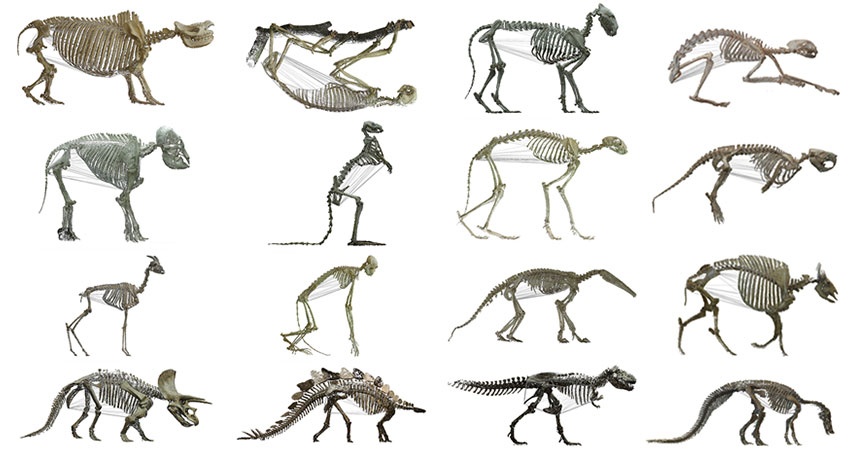
These skeletons are spilling their guts about the size of the body cavity that housed these animals’ stomach and intestines.
Using digital 3-D scans of mounted skeletons, researchers estimated the body cavity volume in 126 species. Of the 76 mammal species, plant eaters had bigger bellies; their relative torso volumes were about 1.5 times as large as those of carnivores, researchers report online November 4 in the Journal of Anatomy.
The study is the first to quantitatively test the long-held idea that herbivores have bigger torsos, says Marcus Clauss of the University of Zurich. Plant eaters are thought to need extra space for complex systems that digest a leafy diet. Surprisingly, Clauss and colleagues didn’t find the same pattern in nonavian dinosaurs, birds or reptiles, but the researchers had fewer skeletons to compare. Of the 27 dinosaurs, for example, only four were carnivores.
Still, the research suggests that in tetrapods — four-limbed vertebrates — only mammalian herbivores have larger body cavities, raising questions about why that might be evolutionarily. “Everybody goes crazy about the long neck or the strange things” on an animal’s head, Clauss says. But few scientists have focused on the torso’s frame and how diet helps sculpt it over time. “This study emphasizes that the torso is an important part of overall body shape.”
SAN DIEGO — Society’s record for protecting public health has been pretty good in the developed world, not so much in developing countries. That disparity has long been recognized.
But there’s another disparity in society’s approach to public health — the divide between attention to traditional diseases and the resources devoted to mental disorders.
“When it comes to mental health, all countries are developing countries,” says Shekhar Saxena, director of the World Health Organization’s department of Mental Health and Substance Abuse. Despite a breadth of scope and depth of impact exceeding that of many more highly publicized diseases, mental illness has long been regarded as a second-class medical concern. And modern medicine’s success at diagnosing, treating and curing many other diseases has not been duplicated for major mental disorders.
Saxena thinks that neuroscience research can help. He sees an opportunity for progress through increased interdisciplinary collaboration between neuroscience and mental health researchers.
“The collaboration seems to be improving, but much more is needed and not only in a few countries, but all countries,” he said November 12 at the annual meeting of the Society for Neuroscience.
By almost any measure, mental health disorders impose an enormous societal burden. Worldwide, direct and indirect costs of mental disorders exceed $2.5 trillion yearly, Saxena said — projected to reach $6 trillion by 2030. Mental illnesses also disable and kill in large numbers: Global suicides per year total over 800,000. “Indeed, it is a hidden epidemic,” Saxena said. That’s more deaths than from breast cancer and probably more from malaria, according to a new comprehensive analysis of global mortality.
Mental illnesses encompass a wide range of disorders, from autism and Alzheimer’s disease to substance abuse and schizophrenia. Saxena acknowledged that there have been advances in the scientific understanding of these diseases, but not nearly enough. No easily used diagnostic test is available for most of them. And no new class of drugs for treating major mental disorders has appeared in the last 20 years, with the possible exception of dementia.
“We need increased investment in research, increased public, private and philanthropic investments,” Saxena said. “We need increased connection of research with public health gains.” He called on the community of neuroscientists to establish a “grand challenge” to researchers to address these concerns.
“There have been many grand challenges in neurosciences — perhaps we need one for finding out mental health interventions,” he said.
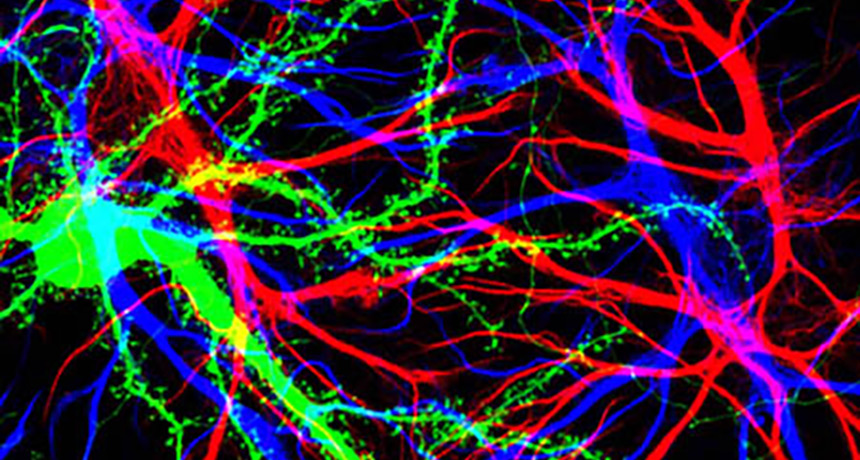
Many neuroscientists are, of course, aware of the important link between their research and mental health. Some progress is being made. One promising avenue of work focuses on synapses, the junctures through which nerve cells in the brain communicate. Typically synapses form where axons, the long neuronal extensions that transmit signals, connect with dendrites, the neurons’ message-receiving branches. Most of the axon-dendrite connections occur at small growths called dendritic spines that protrude from the dendrite surface.
Several sessions at the neuroscience meeting described new work showing ways in which dendritic spines may be involved in mental disorders. One session focused on the protein actin, a prime structural component of the spines.
Actin activity depends on a complicated chain of chemical reactions inside a cell. In mice, blocking a key link in that chain reduces the number of spines in the front part of the brain, Scott Soderling of Duke University School of Medicine reported. Those mice then exhibited symptoms reminiscent of schizophrenia in people.
It seems that losing spines in the frontal cortex alters nerve cell connections there; with spine shortages, some axons link directly to the dendrite shaft. Bypassing spines, which play a filtering role, can intensify signals sent to the ventral tegmental area, which in turn may send signals that increase production of the chemical messenger dopamine in another brain region, the striatum. “We think that this is actually what is driving the elevated dopamine levels” in disorders such as schizophrenia, Soderling said.
Some antipsychotic drugs (known as neuroleptics) for treating schizophrenia work by blocking sites of dopamine action in the striatum. But such drugs do nothing about the loss of spines that initiated the problem.
“These neuroleptics largely treat these symptoms, but they’re not a cure,” Soderling said. “We think that this is good evidence … for the idea that these drugs are treating a downstream consequence of a primary insult that’s occurring elsewhere in the brain.”
This insight from neuroscience — that antipsychotics treat downstream symptoms, not the problem at its source — may help the search for better treatments.
Soderling suggests that many other mental disorders may have their roots in problems with actin in dendritic spines. Another speaker at the neuroscience meeting, Haruo Kasai of the University of Tokyo, emphasized how fluctuations in the numbers of spines, related to actin activity, could play a role in autism.
Such results from neuroscience should be of great value to fighting mental disorders. But science alone won’t enable the discovery of effective treatments without a broader scope of scientific investigation of mental illness as a global problem. Too much of research to date focuses on too small a portion of the worldwide population. As Saxena noted, more than 90 percent of scientific studies on mental illness are from — and about — high-income countries.
“We are ignoring a very large number of people living in this world,” he said. “And this can be, and is, a real impediment to science. If we don’t know what is happening in the brains of the majority of the people living in this world, can we really advance science in the best possible manner? Can we still say that we know the human brain? And at least my answer would be: No.”
A “three-parent baby” was born in April, the world’s first reported birth from a controversial technique designed to prevent mitochondrial diseases from passing from mother to child.
“As far as we can tell, the baby is normal and free of disease,” says Andrew R. La Barbera, chief scientific officer of the American Society for Reproductive Medicine. “This demonstrates that, in point of fact, the procedure works.”
The baby boy carries DNA not only from his mother and father but also from an egg donor, raising both safety and ethical concerns. In particular, people worry that alterations of the genetic makeup of future generations won’t stop with preventing diseases but could lead to genetically enhanced “designer babies.” Opponents, such as Marcy Darnovsky, executive director of the Center for Genetics and Society in Berkeley, Calif., are also worried that the technique hasn’t been fully tested. “We wish the baby and family well, and hope the baby stays healthy,” Darnovsky says. “But I have a lot of concerns about this child and about future efforts to use these techniques before they’ve been shown to be safe.”
About one in 4,000 children are born with dysfunctional mitochondria. These energy-generating organelles are inherited from the mother and have their own DNA. Mutations in some of the 37 mitochondrial genes can lead to fatal diseases, often affecting energy-hungry organs such as the brain and muscles. Because there is no cure or effective treatment for many mitochondrial diseases, the recent birth has been heralded as a sign of new hope for affected families.
Even if women don’t have mitochondrial diseases themselves, they can pass the diseases to their children if their egg cells contain large numbers of defective mitochondria. The mother of the recent three-parent baby had previously had two children who died of Leigh syndrome, a mitochondrial disease that affects the nervous system and eventually prevents a person from breathing.
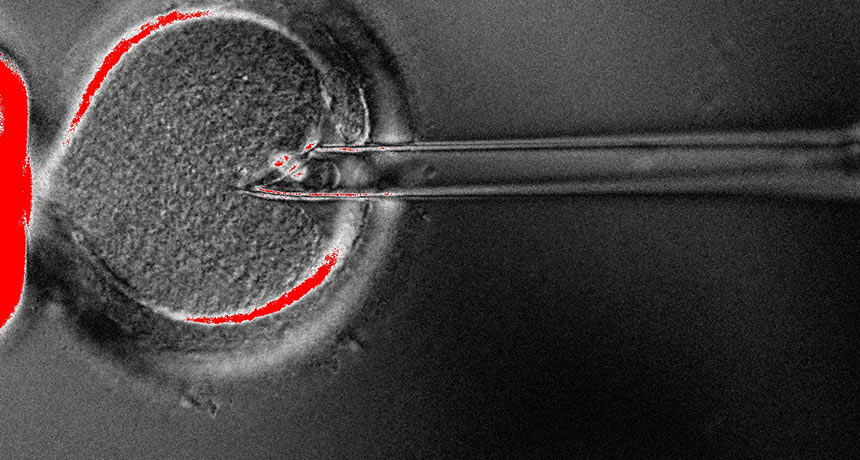
Fertility doctor John Zhang of the New Hope Fertility Center in New York City and colleagues performed what’s called a spindle transfer to put all the chromosomes from the mother’s egg into a donor egg that contained healthy mitochondria but had been emptied of its chromosomes (SN Online: 10/18/16). The egg was then fertilized with sperm and implanted in the mother.
Cell swap A baby boy born in April has DNA from three people. To produce the embryo, researchers transferred the chromosomes from the mother’s egg into a donor egg with healthy mitochondria. The technique is called “spindle transfer” for the cellular structure that segregates the chromosomes.
“It’s very important that they follow up,” to monitor the child’s long-term health, says Shoukhrat Mitalipov, a mitochondrial biologist at Oregon Health & Science University in Portland. Mitalipov pioneered the spindle transfer technique in monkeys (SN: 9/26/09, p. 8). Even a small number of defective mitochondria carried over from the mother’s egg may replicate and cause problems later on, he and other scientists have found (SN: 6/25/16, p. 8; SN Online: 11/30/16).
Zhang reported that just 1.6 percent of the baby boy’s mitochondrial DNA came from his mother (SN Online: 10/19/16). Mitalipov notes, however, that doctors can’t know from sampling a few types of tissue whether other tissues have different levels of mitochondrial carryover. What’s more, levels of mutant mitochondria may change as the child grows.
Mitalipov supports research on the technique but says it should be done in carefully controlled clinical trials. Results of a mouse study published in July suggest that mismatches between the parents’ nuclear DNA and the donor mitochondrial DNA could affect metabolism and aging (SN: 8/6/16, p. 8). Those effects could show up years or decades after birth.
The baby boy born in April is technically not the first three-parent baby. At least two children born in the late 1990s carry mitochondrial DNA from a donor. Those two and 15 other children were born to mothers who had a small amount of cytoplasm — the gelatinous fluid that fills cells and holds mitochondria — from a donor egg injected into their own eggs in an effort to improve results of in vitro fertilization. No major health problems have been reported, but the studies were abandoned because of ethical concerns, lack of funding and the difficulties in obtaining newly required permits.
La Barbera disputes the term “three-parent baby” entirely. “A person’s essence as a human being comes from their nuclear genetic material, not their mitochondrial genetic material,” La Barbera says. Children who are born after mitochondrial transfer procedures have only two parents, he contends.
Zhang drew fire for going to Mexico to perform the procedure. Congress currently bars the U.S. Food and Drug Administration from reviewing applications to make heritable changes in human embryos, which includes the spindle transfer technique. A panel of experts said in February that it is ethical to make three-parent baby boys (SN Online: 2/3/16), a provision that would prevent future generations from inheriting the donor mitochondria. Because mothers pass mitochondria on to their babies but fathers usually do not, technically baby boys born through this technique don’t carry an inheritable modification in their DNA.
Clinics in the United Kingdom can legally perform the procedures, but none have been reported yet. A panel of experts there recommended November 30 that clinical studies could move ahead, so more babies may be born in 2017.
A new blood test can detect even tiny amounts of infectious proteins called prions, two new studies show.
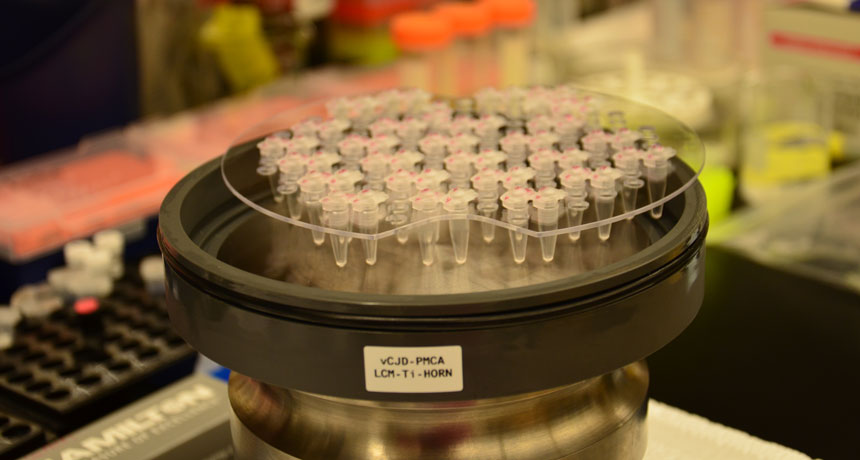
Incurable prion diseases, such as mad cow disease (BSE) in cattle and variant Creutzfeldt-Jakob disease (vCJD) in people, result from a normal brain protein called PrP twisting into a disease-causing “prion” shape that kills nerve cells in the brain. As many as 30,000 people in the United Kingdom may be carriers of prions that cause vCJD, presumably picked up by eating BSE-tainted beef. Health officials worry infected people could unwittingly pass prions to others through blood transfusions. Four such cases have already been recorded. But until now, there has been no way to screen blood for the infectious proteins. In the test, described December 21 in Science Translational Medicine, magnetic nanobeads coated with plasminogen — a protein that prions grab onto — trap prions. Washing the beads gets rid of the rest of the substances in the blood. Researchers then add normal PrP to the beads. If any prions are stuck to the beads, the infectious proteins will convert PrP to the prion form, which will also stick to the beads. After many rounds, the researchers could amplify the signal enough to detect vCJD prions in all the people in the studies known to have the disease.
No healthy people or people with other degenerative brain diseases (including Alzheimer’s and Parkinson’s) in either study had evidence of the infectious proteins in their blood. And only one of 83 people with a sporadic form of Creutzfeld-Jakob disease tested positive. Those results indicate that the test is specific to the vCJD prion form, so a different test is needed to detect the sporadic disease.
In two cases, researchers detected prions in frozen blood samples collected 31 months and 16 months before people developed vCJD symptoms.
Chalk up one more loss for physicists searching for dark matter. Scientists with the XENON100 experiment have largely ruled out another experiment’s controversial claim of detecting dark matter.
XENON100, located in Italy’s Gran Sasso National Laboratory, aims to directly detect particles of dark matter — the unknown substance that scientists believe makes up the bulk of matter in the cosmos (SN: 11/12/16, p. 14).
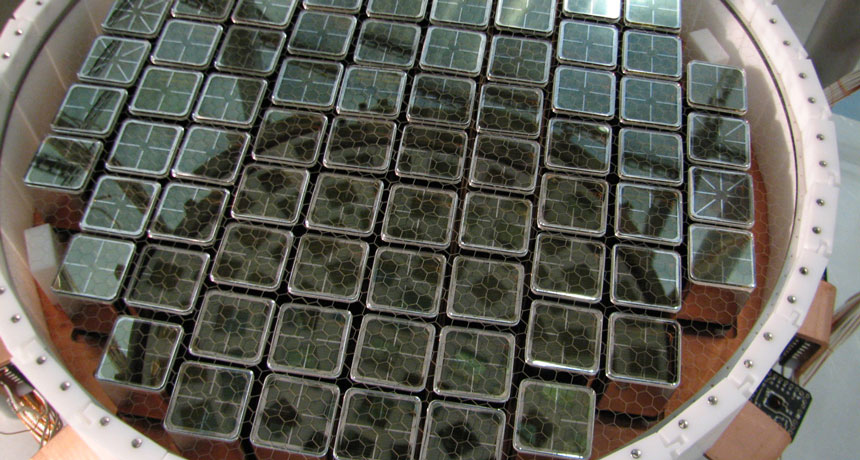
In their new analysis, published online January 3 at arXiv.org, XENON100 scientists looked for an annual variation in the rate of blips in their detector, a tank filled with 161 kilograms of liquid xenon. Such a signal could be a hallmark of Earth’s motion through a prevailing wind of dark matter particles as the planet makes its yearly jaunt around the sun. Another dark matter experiment at Gran Sasso, DAMA/LIBRA, claims to have found strong evidence of a yearly modulation, but other experiments have failed to replicate the result. Scientists combed over four years of data for events that could be caused by dark matter interacting with electrons in XENON100. The researchers found no evidence of an annual cycle, contradicting DAMA’s claim.
Dark matter optimists can still cling to a caveat, though: DAMA uses a different detection material, composed of sodium iodide crystals rather than xenon. That might explain the difference between the two experiments. Future experiments will attempt to replicate DAMA’s result using the same material.
Dinosaurs might live on today as birds, but they hatched like reptiles. Developing dinos stayed in their eggs three to six months before emerging, far longer than previously suspected, researchers report online January 3 in the Proceedings of the National Academy of Sciences.
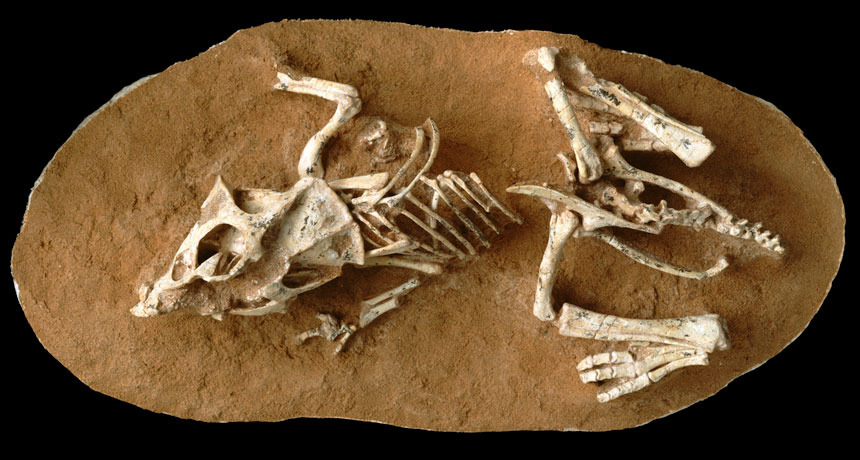
With few clues to dinosaurs’ embryonic lives, scientists assumed that young dinosaurs shared modern birds’ swift incubation period, which ranges from 45 to 80 days for eggs in the size range of dino eggs. A reptile egg generally takes about twice as long to hatch as a bird egg of similar size, says lead author Gregory Erickson, a paleobiologist at Florida State University in Tallahassee. But counts of growth lines on the teeth of rare fossilized dinosaur embryos from two species, Protoceratops andrewsi and Hypacrosaurus stebingeri, suggest a longer trajectory like that of reptiles, say Erickson and colleagues at the University of Calgary in Canada and the American Museum of Natural History in New York City. These lines, laid down daily on teeth, can be used like tree rings.
The longer incubation time might have worked against dinosaurs, Erickson says. Guarding a brood of eggs for many months could put parents at risk of attack. And a species hit by environmental catastrophe would have a harder time bouncing back.
Before an immature Zika virus becomes infectious, it does some major remodeling.
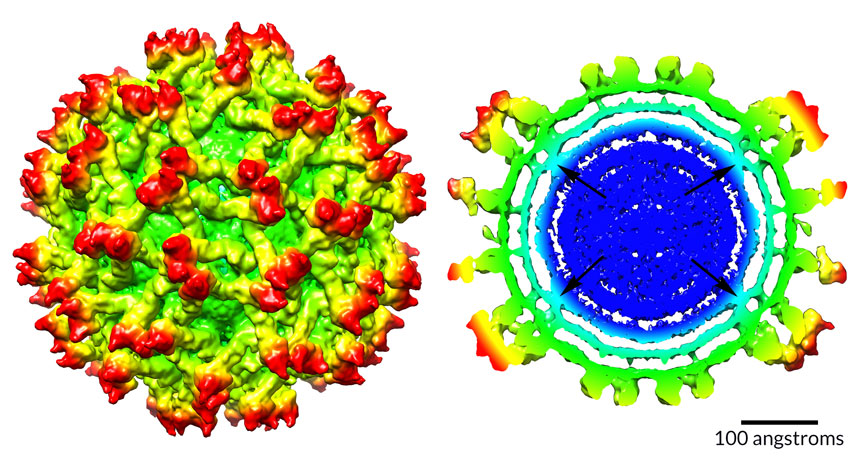
In a fledgling virus particle, the inner protein and RNA core (shown in dark blue above, right) forms bridges to the membrane layer that surrounds it. As the virus matures, the core shuffles around and the bridges melt away (below, right).
It’s the first time scientists have seen such rearrangement in the core of a flavivirus, the group that also includes the viruses that cause dengue, West Nile and yellow fever, says virologist Richard Kuhn of Purdue University in West Lafayette, Ind. Scientists don’t know why the immature Zika virus reshuffles its insides, Kuhn says — perhaps it helps the maturing virus become infectious. But that’s the next big question to answer, he says.
If blocking the reorganization somehow made mature viruses harmless, scientists would have a new clue about preventing Zika infection. Kuhn and colleagues’ map of the immature virus’s structure, published online January 9 in Nature Structural & Molecular Biology, could offer other hints for thwarting Zika.
With a technique called cryo-electron microscopy, the team could see three-headed protein spikes (shown in red) studding the surface like some kind of medieval weapon, and could even distinguish the separate layers of the membrane (aqua) that encloses the core. (The maps are radially colored; colors change as distance from the core increases.) Outside the membrane lie surface proteins called envelope, or E, proteins (green and yellow) that help the virus sneak into cells.
Last year, Kuhn’s team reported the structure of the mature Zika virus (SN: 4/30/16, p. 10). The new work offers another illuminating peek at Zika — a baby picture, of sorts.
Any exercise — even the weekend warrior approach, cramming it all into Saturday and Sunday — is better than none. Compared with inactive adults, those who got the recommended amount of weekly exercise, or even substantially less, had about a one-third lower risk of death during the study period, researchers report online January 9 in JAMA Internal Medicine.
Gary O’Donovan at the University of Leicester in England and colleagues analyzed data from 63,591 people ages 40 and older, surveyed between 1994 and 2012 as part of the Health Survey for England and the Scottish Health Survey. Adults should be getting 150 minutes of moderate activity (such as walking) or 75 minutes of vigorous activity (such as jogging) spread out across the week, according to the U.S. Centers for Disease Control and Prevention and the World Health Organization. Measured against people who did absolutely nothing, active people who worked up a sweat three or more times per week, weekend warriors and even those who moved less (60 minutes per week on average) all reduced their risk of dying early. The observational study can’t say that exercise caused the reduced risk, just that there’s an association.