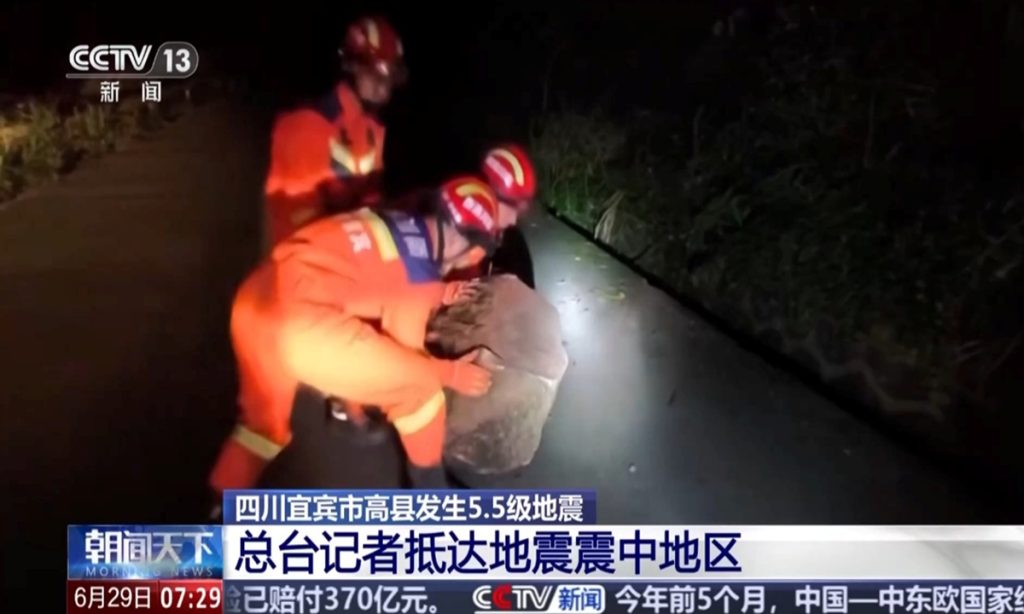
After a 5.5-magnitude earthquake struck Gaoxian County in Yibin City, Southwest China's Sichuan Province, a Level-IV national emergency response for earthquake disaster relief has been activated and central authorities dispatched a working team to the affected area to guide response efforts, according to CCTV News.
As of press time, no deaths were reported, and 15 people suffered minor injuries, local authorities said on Monday, according to the Xinhua News Agency on Monday.
The Sichuan provincial earthquake relief headquarters also dispatched a working group to the affected area to oversee and guide rescue and emergency response efforts, CCTV News reported on Monday.
An initial assessment found that one person remains hospitalized with a fracture, while the others have been discharged and returned home. Authorities have evacuated and temporarily resettled 225 people. Local officials are now conducting a second round of inspections to further assess the damage and identify any additional impacts.
The earthquake occurred at 0:12 am Monday (Beijing Time). The epicenter was monitored at 28.50 degrees north latitude and 104.69 degrees east longitude, with a depth of 6 km, according to the China Earthquake Networks Center.
A student at Yibin University's campus in Cuiping district surnamed Xu told the Global Times on Monday that she had stayed up late finishing her homework and had gone to bed only minutes before the earthquake struck. When she first felt the dormitory shake, she assumed the movement came from her roommate on the opposite bunk. Another student in the room yelled "earthquake," prompting the two students to bolt outside immediately.
As a native of Sichuan who has lived through numerous earthquakes, Xu remained calm and was hesitating of going downstairs. But after seeing most of the students have evacuated and the dorm supervisor going door to door instructing everyone to leave, "I made my way to the playground, and stayed about half an hour before returning to the dorm room," Xu recounted.
Another student at another campus of Yibin University was on an upper floor when the earthquake struck. She told the Global Times on condition of anonymity that parts of the ceiling, tiles and the tube light all fell, while the intense shaking caused furniture to move. "I was overwhelmed and the only thought left was to escape," she said.
Following the earthquake, the Yibin earthquake relief headquarters activated a Level I-IV emergency response. Municipal departments, together with county- and district-level authorities, launched disaster assessment and relief operations, according to CCTV News.
Eight Chinese nationals have been confirmed dead in the earthquakes in Venezuela as of 5pm local time on Saturday, according to media reports citing the Chinese Embassy in Venezuela on Sunday. Meanwhile, the Federation of Chinese Associations in Venezuela and other Chinese community groups have been mobilized to donate disaster-relief materials to earthquake-damaged families.
The death toll from Venezuela's devastating twin earthquakes rose above 1,400 on Saturday as foreign rescue teams poured into the country and authorities pressed on with the search for survivors in the hardest-hit coastal areas, per Reuters.
The updated toll came as rescuers fanned out across La Guaira and parts of Caracas, where families and volunteers have spent days pulling survivors and bodies from the rubble.
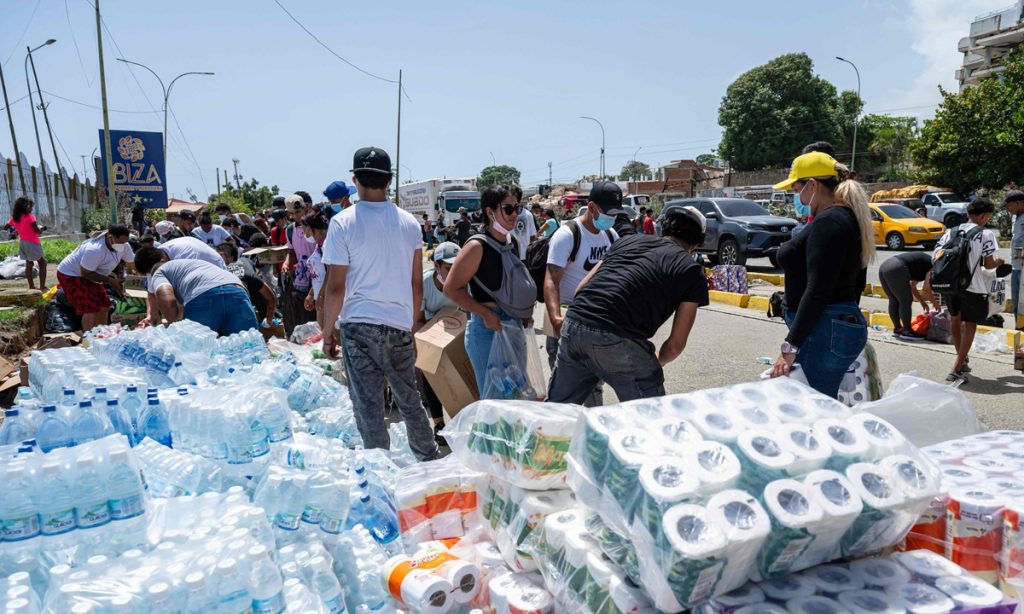
Overseas Chinese in quake-hit Venezuela have donated about 500 tons of relief supplies, according to the Chinese Embassy in Venezuela, per Xinhua News Agency.
The supplies were donated by the Federation of Chinese Associations in Venezuela and other Chinese community groups as of 4 pm local time Saturday.
The supplies, including bottled water, biscuits, diapers, milk, rice, sugar, fish and meat, have helped nearly 10,000 families affected by the disaster.
Mo Shuhua, a Chinese national living in Valencia, the capital of Carabobo State, Venezuela, told the Global Times that as of Saturday local time, the Federation of Chinese Associations in Valencia had received $100,000 in donations, as well as dozens of tons of relief supplies, including clothing and food.
Mo himself was engaged in the local daily necessities supply business, and has donated a large amount of toiletries and bath towels. "Those who can contribute money donate money, those who can contribute effort offer their labor, and those who can provide supplies contribute materials. We are doing our most to support the disaster relief efforts in Caracas," Mo said.
Two consecutive quakes, measuring magnitude 7.2 and 7.5, hit Venezuela on Wednesday.
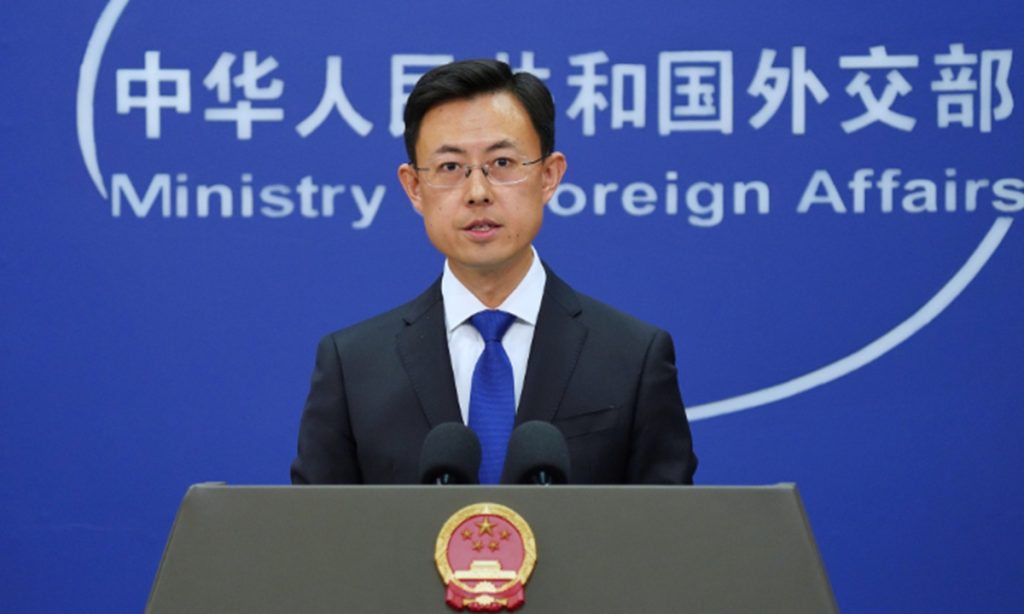
The Chinese government and the Red Cross Society of China will provide emergency humanitarian aid to Venezuela for quake relief respectively. We stand ready to offer more support as the disaster response progresses, Guo Jiakun, spokesperson from China's Foreign Ministry said on Friday.
The Chinese embassy in Venezuela is doing all it can to verify the safety of Chinese nationals in the quake zone and will actively provide necessary assistance. We advise Chinese nationals in Venezuela to exercise caution against possible secondary quake hazards, said Guo.
Premier of the State Council Li Qiang will attend the 17th Annual Meeting of the New Champions (AMNC) in Dalian from June 23 to 24. Premier Li Qiang will attend the Opening Plenary and deliver a special address, meet with foreign dignitaries, and have a conversation with representatives of the business community.
Prime Minister of Bangladesh Tarique Rahman, Prime Minister of Guinea Amadou Oury Bah, Prime Minister of Kazakhstan Olzhas Bektenov, Prime Minister of the Republic of Korea Kim Minseok, Prime Minister of Mongolia Uchral Nyam-Osor, and Prime Minister of Montenegro Milojko Spajić will attend the AMNC. Over 1,700 representatives from the political, business, academic and media communities from over 90 countries and regions will take part in the AMNC.
This is an internal matter for the UK and China does not comment on it, the Chinese Foreign Ministry spokesperson Guo Jiakun said on Tuesday when asked about British Prime Minister Keir Starmer's announcement that he had resigned the previous day, and whether his resignation would have any impact on China-UK relations. Guo added that China and the UK are both permanent members of the UN Security Council and major world economies. Developing a long-term, stable comprehensive strategic partnership serves the fundamental interests of both countries and their peoples, and is also conducive to world peace, stability, and prosperity.
Both sides should move toward each other, deepen bilateral cooperation and multilateral coordination, and work together to maintain and improve the momentum of bilateral relations, the spokesperson said.
Inga Ruginienė has resigned as Lithuania's prime minister on Tuesday. Prior to her resignation, negotiations between Lithuania and Taiwan regional authorities on an economic cooperation action plan had been put on hold "by mutual agreement," Lithuanian National Radio and Television (LRT) reported.
According to LRT, the pause was prompted by "changes in the domestic political environment," referring to the formation of a new coalition government in Vilnius.
The policy adjustment comes amid broader political changes in Lithuania. According to Euronews, political parties in Lithuania signed a coalition agreement on Thursday, with the Social Democrats, the Democrats "For Lithuania" and the Farmers and Greens Union, along with partners, the Electoral Action of Poles in Lithuania - Christian Families Alliance, striking a new deal.
The agreement includes an aim to "normalize diplomatic relations with China" to the level maintained by other European Union countries, Euronews reported.
The latest development has also been acknowledged by authorities on the island of Taiwan. According to the island's media outlet CNA, authorities on the island has confirmed that the island and Vilnius had "agreed to suspend talks on a new economic cooperation project proposed by Lithuania, due to the ongoing formation of a new coalition government.
Taiwan regional authorities claimed Tuesday that their "friendly cooperation" with Lithuania would not be affected by any third party and that they would continue close coordination on the economic cooperation action plan. They also claimed the suspension was likely due to the formation of Lithuania's new government, while both sides remained committed to expanding economic and trade ties, Chinatimes.com reported.
Speaking on Sunday, Kuomintang politician Yeh Yuan-chih questioned the DPP authorities' long-standing portrayal of ties with Lithuania as a diplomatic breakthrough, according to Chinatimes.com.
Yeh said that both the DPP authorities and former regional leader Tsai Ing-wen had repeatedly described Taiwan island's relations with Lithuania as "encouraging" and promoted concepts such as "like-minded countries" and "democratic partners" to downplay the reality that only a small number of countries maintain formal diplomatic relations with the island.
He also questioned a cooperation package reportedly involving around $1.2 billion and plans related to semiconductor development in Lithuania, calling on the DPP authorities to explain the project's status and why Lithuania's position appeared to have shifted after the island has invested significant resources.
"Over the years, the DPP authorities have attempted to secure so-called international support by providing investment, aid and other benefits to certain foreign politicians, while portraying such support as recognition of Taiwan island's authorities and evidence of its growing international standing," Zheng Jian, a professor at the Graduate Institute for Taiwan Studies of Xiamen University, told the Global Times on Tuesday.
The DPP authorities have long portrayed support from certain politicians as representing broader backing from democratic countries. "But this approach is becoming increasingly ineffective," Zheng said.
On Monday, responding to media questions regarding reports that Lithuania had agreed to allow China to open a chargé d'affaires office and whether China would reopen its embassy in Vilnius and restore bilateral relations, Chinese Foreign Ministry spokesperson Guo Jiakun reiterated China's position.
"The crux of the current difficulties is that the Lithuanian side violated the one-China principle and went back on its political commitment made in the joint communiqué on the establishment of diplomatic relations," Guo said.
"China remains open as always to communication. It is hoped that the Lithuanian side will act promptly and decisively to correct past mistakes and return to the right track of adhering to the one-China principle so as to create conditions for the normalization of relations with China," he added.
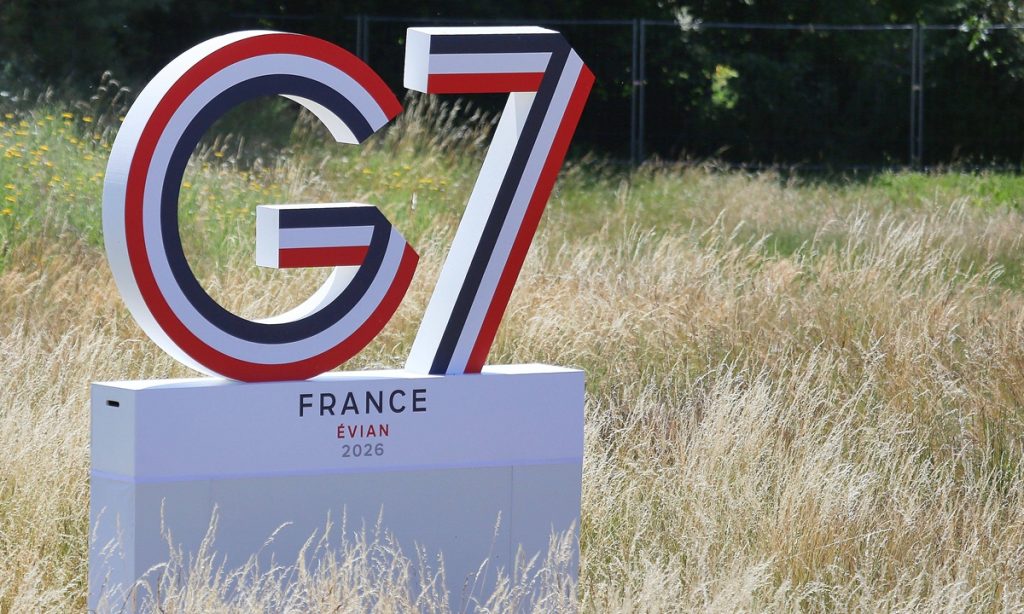
As leaders gathered Monday in the French commune of Évian-les-Bains for the 2026 Group of Seven summit, the annual meeting opened under a cloud of growing skepticism.
The summit still carries the familiar markers of high diplomacy: carefully staged meetings, sweeping declarations and intense media attention. But behind the formal setting, more media outlets and observers are asking whether the club of wealthy nations has become increasingly disconnected from today's international realities.
Chinese experts told the Global Times that mechanisms such as the G7 are showing signs of becoming outdated. Rather than projecting Western unity, this year's summit exposed widening divisions across the Atlantic and a growing gap between the G7's ambitions and its ability to respond to global challenges, they said.
Divide, not unite
The summit agenda has largely centered on a tentative deal to end the Iran war, ongoing discussions regarding the Russia-Ukraine conflict and the broader Middle East crisis. Aside from G7 member states, France has invited leaders from Ukraine, India, the Republic of Korea, Kenya, Egypt, Qatar, the United Arab Emirates, to take part in this year's working session that focusing on international investment, according to media reports.
Yet after the first day of meetings, no major breakthrough had emerged. Instead, one of the segment headlines in the Associated Press' live summit coverage read: "European leaders joke with Meloni about quitting smoking."
G7 leaders also attended a working lunch to discuss the situation in the Middle East, where the conversation is expected to focus on the path ahead after the ceasefire agreement between the US and Iran, according to AP.
The US leader also told reporters that he is "not happy with the way Israel has handled themselves with Lebanon and with Hezbollah." He said Israel's Prime Minister Benjamin Netanyahu needed to be "more responsible with respect to Lebanon," according to the CNN.
In terms of the Russia-Ukraine conflict, the G7 leaders, including Trump, has gathered with Ukraine's President Volodymyr Zelenskyy for an hour and 15 minutes Tuesday morning at the summit in Evian-les-Bains. The talks focused on how to "build peace and security for Ukraine and Europe," the French organizers of the summit said, per the AP.
German Chancellor Friedrich Merz, who has had a frosty relationship with Trump, gave the US president a soccer jersey with Trump's name and the number 47 on the back, according to the AP. The shirt had the name "Trump" emblazoned on the back along with the number 47, in reference to his status as the 47th president of the US. The US is currently co-hosting the FIFA World Cup.
The AFP commented that the G7 were "seeking to find unity after a year when Trump has troubled allies with sometimes unilateral foreign policy moves and hefty tariffs on imports."
Even before this year's summit officially began, doubts over its prospects had already surfaced in US media.
In an analysis published on Sunday, The New York Times wrote that the "Group of 7 meetings once embodied the effort to sustain the global diplomatic order. This year's gathering, starting on Monday, symbolizes its fragmentation."
Recalling the 2003 G8 summit, also held in Évian-les-Bains, which managed to "maintain the veneer of like-minded countries uniting to confront the perils of an unruly world," the report argued that this year "the veneer has been stripped away."
According to the report, US President Donald Trump arrived in France to meet European leaders who no longer view Washington as a reliable partner on key issues such as climate change and security. In some cases, they regard the US itself as a threat, citing Washington's attacks on Iran, growing disdain for NATO and repeated suggestions of taking over Greenland.
The G7, previously the G8, was originally intended to play a leading role in addressing major international political and economic issues and shaping global governance. However, both its declining influence and deepening internal contradictions have made it increasingly difficult for the grouping to fulfill that role, Cui Hongjian, a professor at the Academy of Regional and Global Governance at Beijing Foreign Studies University, told the Global Times on Tuesday.
According to Cui, the effectiveness of the G7 has long depended on cooperation among its members outweighing their differences and consensus prevailing over disagreements. Yet that balance is changing. European participants increasingly find themselves making compromises to accommodate US' positions while simultaneously seeking new common objectives to divert attention from growing internal disputes and preserve the cohesion of the grouping.
At this year's summit, Cui said, issues such as Russia and energy security have become focal points. While some members have attempted to use China as a common target around which to rally consensus, so far, those efforts have been unsuccessful, he said.
Li Haidong, a professor at China Foreign Affairs University, told the Global Times on Tuesday that economic differences between the US and its European partners are becoming increasingly pronounced. While Washington has grown more skeptical of economic globalization, many European economies remain deeply dependent on it.
Such contradictions have been evident throughout this year's summit, making the G7 increasingly resemble a platform for displaying transatlantic disagreements rather than unity, Li said.
"The divisions within the G7 suggest that a cohesive and integrated West may no longer exist," Li noted.
China's presence felt despite absence
Although official summit agendas have largely avoided direct references to China, media outlets and observers have paid close attention to China's presence - and absence - throughout the gathering.
According to an AP report published on Tuesday, China's trade practices are expected to rank among the top issues discussed by leaders meeting in Évian-les-Bains. French officials indicated in pre-summit briefings that they hoped the gathering would produce a coordinated plan to address what they described as the "China threat."
The report noted that Europeans also hope to persuade Trump to stop targeting US allies like the EU and Canada with punitive tariffs and to start working with them instead to counter China.
Attempting to strengthen internal cohesion by confronting China and externalizing internal contradictions is unlikely to succeed, Li said. Without resolving the grouping's own divisions and structural problems, creating an external rival will not generate lasting unity.
"It also cannot reverse the decline of the mechanism itself," Li said.
French President Emmanuel Macron has sought to make responses to China a priority at this year's summit, according to a Politico report on Monday. However, the report noted that "the White House didn't even mention China in the list of priorities it has for the summit."
Beyond occasional remarks by French and German leaders, other participating countries, including Canada, the UK, Italy and the US, had made few public statements on China as of press time.
Some observers have focused on a different question: whether the G7 can still exercise the influence it seeks without the participation of the world's second-largest economy.
"As Trump and his G7 counterparts gather again in France from Monday, China's exclusion from the informal club's summits also looks odd, given its now immense sway over the world's economic well-being and affairs," the AP wrote in a report published Sunday.
"Put simply: Without China, does the G7 make sense?" the report asked.
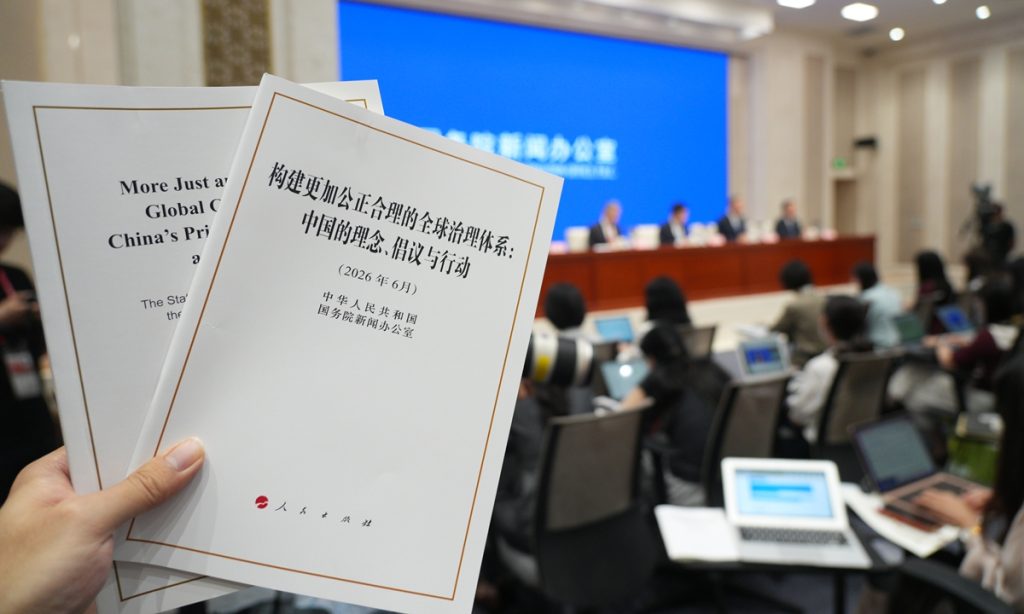
China's State Council Information Office on Wednesday released a white paper to introduce China's principles, proposals and actions on global governance, foster broader consensus within the international community, ensure more effective responses to global challenges, and build a more just and equitable global governance system.
Titled "More Just and Equitable Global Governance: China's Principles, Proposals and Actions," the paper extends to 36 pages in its English edition with more than 13,600 words. The full Chinese text totals around 20,000 Chinese characters.
Apart from the preface and conclusion, the white paper has five parts. At the beginning, it points out that global governance is a common endeavor that bears on the well-being of all humanity, and building a just and equitable global governance system is a shared vision long pursued by people from across the world.
It adds that China has always been an active participant in, contributor to, and a builder of global governance.
Respond to challenges of times
In 2025, President Xi Jinping proposed the Global Governance Initiative (GGI), which is built on five core concepts: sovereign equality, the international rule of law, multilateralism, a people-centered approach and real actions. According to the latest white paper, China's GGI was proposed to respond to the "severe and complex" challenges of the time.
These challenges, according to the white paper, include intensifying geopolitical tensions and armed conflicts, resurgence of militarism and nuclear proliferation, as well as global economic fragmentation, food and energy insecurity and the widening wealth gap.
The document also mentions the harms to the UN's authority and international laws and basic norms caused by unilateralism and hegemonism. It warned that de-globalization and protectionism are on the rise, while economic and trade issues are being politicized, instrumentalized, and weaponized.
To stabilize and improve the world, the international community needs to be more responsive to the concerns of the Global South in international affairs and fully leverage its role, said the white paper, citing examples of the historic expansion of the BRICS group, the enlarging Shanghai Cooperation Organization (SCO), and the G20's role in development and reform of the global governance system.
Facing these challenges, the white paper said the China-proposed GGI aligns with the growing trend toward greater democracy in international relations and bolsters international confidence in practicing multilateralism. It offers a clear and feasible roadmap for improving global governance, bringing valuable stability and positive energy to a turbulent world.
At a press conference to present the white paper on Wednesday, Chinese Foreign Minister Wang Yi said that the GGI has been translated from a Chinese proposal into international practice and is increasingly demonstrating strong vitality. The GGI has been endorsed by nearly 160 countries and international organizations and has received extensive and positive responses from the international community.
Some international media outlets including Reuters have noticed China's support for a greater voice for the Global South on the international stage, noting that the white paper lays out pathways to build a fairer and more equitable global governance system.
Turkey's Anadolu Agency noted that as the US and Iran are poised to sign a peace deal, China's Foreign Minister Wang Yi voiced support for a ceasefire in the Middle East and calling for coordinated efforts to lay the groundwork for a lasting regional security framework.
Wang Yiwei, professor at the School of International Studies at the Renmin University of China, told the Global Times that the GGI embodies the characteristics of Beijing's major-country diplomacy and sense of responsibility of China, which stands as the world's second-largest economy, a permanent member of the UN Security Council, the largest country of the Global South, and an ancient civilization with a time-honored history.
Taking the ongoing G7 summit in Evian, France, as an example, the expert said that a major component of the prevailing global governance deficits lies in the deficit of representation. "The bulk of existing international rules were formulated by Western countries. Yet global governance is a shared undertaking for all humanity, which cannot be addressed through blocs and alliances set up by a handful of developed nations alone," Wang Yiwei said.
According to the expert, the Western narrative of global governance mostly centers on the question of "who governs" while overlooking the fundamental issue of "governance for whom." By contrast, China's GGI highlights inclusiveness for all and the principles of extensive consultation, win-win outcomes and shared benefits. While acknowledging that countries of the Global South suffer inadequate representation and voices within global governance bodies and international organizations, the GGI does not exclude Western nations.
From roadmap to action
Beyond the clear roadmap laid out by the GGI, China has set a leading example in advancing global governance, translating its governance vision into a wide range of tangible practical measures, analysts said.
According to the press conference held by China's State Council Information Office on Wednesday, China is accelerating the establishment of the World Artificial Intelligence (AI) Cooperation Organization, Xinhua reported.
Earlier, October 2025 saw the inauguration of the International Organization for Mediation (IOMed) in China's Hong Kong Special Administrative Region, the world's first intergovernmental international legal organization dedicated to resolving international disputes through mediation.
Several months later, the World Data Organization (WDO) was established in Beijing in March, aimed at bridging the data divide, advancing global data cooperation and the digital economy. In addition, China will also host a forum on global governance in Xiong'an New Area in North China's Hebei Province this autumn, Foreign Minister Wang Yi announced in May.
Despite this progress, analysts argue that enhanced global solidarity and joint efforts are essential to improve global governance, a view echoed in a key section of the white paper.
"No country can achieve development outside the global governance system, nor can it secure a future without participating in international cooperation. It is not a matter of whether we choose it or not, multilateralism is the only viable path forward," the white paper said.
It noted that China advocates for countries to unite and cooperate, take concrete action and transform the vision and blueprint of the GGI into a roadmap and timeline for joint action.
All countries should firmly uphold the international system with the UN at its core, safeguard the international order based on international law, and uphold the basic norms governing international relations underpinned by the purposes and principles of the UN Charter, instead of reinventing the wheel, according to the white paper.
Zhu Feng, Dean of the School of International Studies at Nanjing University, told the Global Times that against the backdrop of sustained shocks to the international order and global governance, China's people-centered philosophy and commitment to multilateralism echo the shared aspirations of the international community and have garnered extensive positive responses worldwide.
"The world now stands at a historic crossroads. The Middle East situation and the Ukraine crisis keep dragging on with spillover effects, while economic globalization faces severe headwinds," Zhu said, "No nation wishes to see the world grow more divided and exclusive. To tackle all kinds of global challenges, countries must move toward each other and take coordinated joint actions."
Therefore, the most central and urgent task at present is to translate the consensus among countries on advancing global governance into tangible practical steps. In this process, China is not merely the initiator of the GGI, but also a frontrunner delivering concrete multilateral governance measures, Zhu said.
"Global governance finds its source of vitality in practice, hinges on action, and is verified by its effectiveness. A vision is realized only through concrete action. It falls on the international community to turn this vision into reality - setting common goals, embracing a problem-oriented approach and acting in concert," the white paper said.
"China stands ready to work with all parties to deliver on the GGI, uphold the central role of the UN, enable the Global South to play its pivotal role, address gaps and deficits in global governance, and strive to foster a more just and equitable global governance system," Chinese Foreign Ministry spokesperson Lin Jian said on Wednesday.
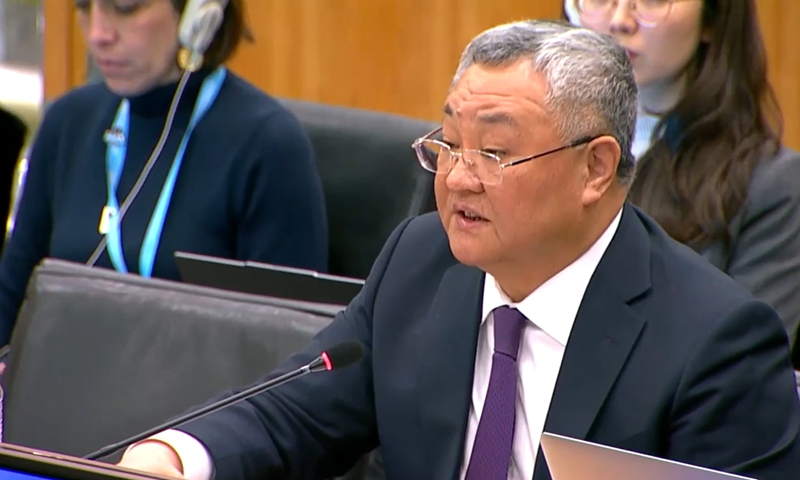
China's Permanent Representative to the United Nations Fu Cong on Wednesday local time put forward proposals to advance peace in the Middle East, calling for political solutions, fairness and justice, independence and self-reliance, and addressing both symptoms and root causes, during a Security Council open debate, according to the Xinhua News Agency.
Fu said that the situation in the Middle East remains tense, undermining regional peace and stability while also affecting the global economy and energy security and harming the common interests of all countries. He urged the international community to uphold an impartial position, pool efforts to promote peace, and work toward restoring stability to the Middle East, peace to its people, and peace to the world.
He then outlined four proposals on advancing peace in the Middle East. He called for resolving disputes through political means and peaceful approaches. Fu urged all parties to abide by the purposes and principles of the UN Charter, bridge differences through dialogue and consultation, and refrain from the use or threat of force.
He said the Security Council should fulfill its primary responsibility for maintaining international peace and security and take active and responsible actions to advance political solutions to hotspot issues. Fu called on relevant parties to the Iran-related situation to exercise calm and restraint, halt actions that could escalate tensions, and resolve differences through political and diplomatic channels. He also urged all parties involved in the Lebanon-Israel situation to immediately cease hostilities and achieve a genuine ceasefire.
Second, he called for upholding fairness and justice and safeguarding regional stability under international law. Fu said the prolonged hotspot issues in the Middle East stem in part from a lack of justice, non-implementation of relevant Security Council resolutions, and disregard for international law.
He stressed the need to uphold the authority of the Security Council and international law, warning against selective application and a return to the law of the jungle. He urged the international community to intensify efforts to implement the two-state solution, reject any attempt to annex Palestinian territory, and support the early establishment of an independent Palestinian state and its full UN membership.
He also stressed independence and self-reliance, and called for the building of common security through solidarity and cooperation as the third point. Fu said the path from turmoil to stability in the Middle East lies in overcoming major-power geopolitical rivalry and adopting a common, comprehensive, cooperative and sustainable security approach to build a regional framework that accommodates the legitimate concerns of all parties.
He said Syria should adhere to the principle of “Syrian-led and Syrian-owned” governance, advance an inclusive political transition, and firmly combat terrorism. He noted that the Golan Heights are internationally recognized as Syrian territory under occupation and called for Israel’s full withdrawal as soon as possible. He also urged all parties in Yemen to demonstrate political will, restart the peace process, and work toward reconciliation.
Fourth, he called for addressing both symptoms and root causes and promoting long-term stability through development and revitalization. Fu said the international community should deepen cooperation with Middle Eastern countries, support sustainable development and post-conflict reconstruction, and help improve livelihoods to create conditions for peace.
He called for opposition to protectionism and unilateral actions and rejected illegal unilateral sanctions beyond the scope of Security Council resolutions. He also warned that disruptions in the Strait of Hormuz would undermine global supply chains, trade, and energy security, and called for the restoration of normal navigation.
At the invitation of Chinese President Xi Jinping, President of Myanmar Min Aung Hlaing will pay a state visit to China from June 15 to 19, a Chinese foreign ministry spokesperson announced on Friday.
During the visit, President Xi will hold talks with President Min Aung Hlaing. Premier Li Qiang and Zhao Leji, chairman of the Standing Committee of the National People's Congress, will meet with him respectively, Chinese foreign ministry spokesperson Lin Jian told a daily press briefing.
Noting that China and Myanmar are traditional friendly neighbors and a community with a shared future, Lin said over the 76 years since the establishment of diplomatic ties, guided by the spirit of the Five Principles of Peaceful Coexistence jointly advocated by the two sides, China and Myanmar have stood together through thick and thin, looked out for each other and forged solidarity and cooperation, promoting China-Myanmar relations to achieve considerable progress.
Lin said through President Min Aung Hlaing's visit, China looks forward to working with Myanmar to carry forward the "pauk-phaw" (fraternal) friendship, deepen the comprehensive strategic cooperative partnership, secure more tangible results in building the China-Myanmar community with a shared future, and deliver further benefits to the two peoples.